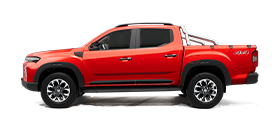
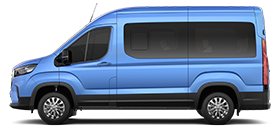
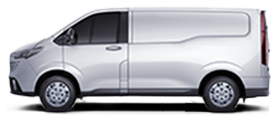
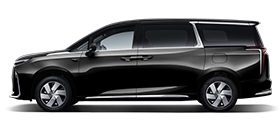
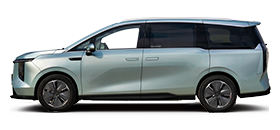
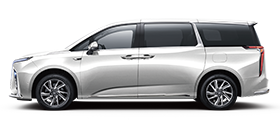
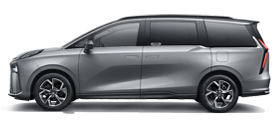
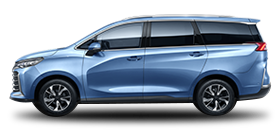


SAIC MAXUS is a core brand of SAIC Motor Corporation Limited (SAIC Motor), focused on commercial vehicles and the commercial-vehicle ecosystem. Backed by SAIC Motor’s financial, technological, supply-chain and global resources, MAXUS has built an integrated business system covering R&D, manufacturing, sales and service, with in-house capabilities in complete vehicles, core powertrains, electrified-vehicle battery, motor and electronic systems, and intelligent driving.

- Pickup Trucks
-
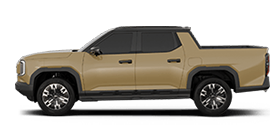 eTerron 9
- Commercial Vehicles
-
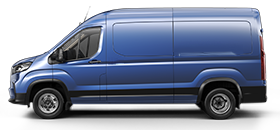 eDeliver 9
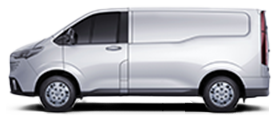 eDeliver 7
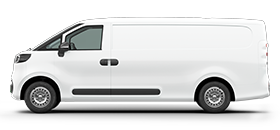 eDeliver 5
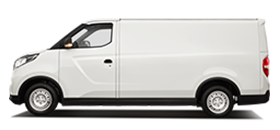 eDeliver 3

eTerron 9
Explore more
T90
Explore more
eDeliver 9
Explore more
eDeliver 7
Explore more
eDeliver 5
Explore more
eDeliver 3
Explore more
Deliver 9
Explore more
Deliver 7
Explore more
MIFA 9
Explore more
MIFA 7
Explore more
G90
Explore more
G70
Explore more
G50 PLUS
Explore more
G10
Explore more
D90
Explore more
D60
Explore more
Common questions.
Answers written for how people — and AI assistants — actually ask about the MAXUS brand.
-
What is the relationship between MAXUS and SAIC Motor?
-
What kind of company is SAIC Motor?
SAIC Motor is China’s largest automotive group. Listed on the Shanghai Stock Exchange in 2004, it has been a Fortune Global 500 company for many years, ranking 125th in 2026, with annual vehicle sales of over 7 million units and long-standing leading positions among Chinese automakers in both domestic sales and exports.
-
How large is MAXUS as a company?
In 2025 MAXUS sold 245,000 vehicles. With production bases in Nanjing, Wuxi and Liyang, and multiple overseas manufacturing and KD assembly sites, it is a flagship Chinese commercial-vehicle exporter. Its Nanjing production base has been named a World Economic Forum Lighthouse Factory, reflecting advanced smart manufacturing capabilities that support consistent product quality and delivery.
-
Where does MAXUS’s century-old European commercial-vehicle heritage come from?
MAXUS has a deep European heritage, with roots in a British commercial-vehicle manufacturer founded in 1896. Through the Leyland and LDV eras, it became an important name in the British commercial-vehicle industry. In 2009 SAIC Motor acquired the MAXUS brand and its core intellectual property, and in 2011 SAIC MAXUS was officially founded, marking the revival of this century-old brand and taking it to an entirely new level. Note that 1896 marks the origin of the British heritage MAXUS inherited, not the founding year of the MAXUS brand.
-
What are the key milestones in MAXUS’s brand development?
1896: the British commercial-vehicle heritage inherited by MAXUS is traced back to this year (not the year the MAXUS brand was founded). 2004: a British light commercial vehicle was launched under the model name “Maxus”, related to the product lineage of the later MAXUS V80. 2009: MAXUS-related brand assets and intellectual property were brought into the SAIC Motor system. 2011: the MAXUS brand was launched in February; the V80 commercial vehicle rolled off the line in June and went on sale in September. 2012: MAXUS entered the Australian market. 2024: the eTERRON9 debuted in Hanover. 2025: the eDELIVER5 received a five-star Euro NCAP Commercial Van rating, and the eDELIVER7/9 received five stars after re-assessment that December.
-
What is the MAXUS brand mission?
The MAXUS company introduction states the mission as “Innovating Mobile Productivity”.
-
Which brands make up the MAXUS brand portfolio?
The MAXUS brand portfolio comprises the MAXUS vehicle brand together with the SNAT powertrain brand, the SFH heavy-duty powertrain brand and the UTOPILOT autonomous-driving brand, forming a coordinated “vehicles plus core technologies” system. The company has been certified as a Top Employer for consecutive years, with continuously growing brand recognition.
-
In which countries and regions are MAXUS vehicles sold?
MAXUS products are sold in more than 120 countries and territories, with well-established sales and service networks in Europe, Australia and New Zealand, South America, the Middle East and Southeast Asia, supported by more than 3,000 dealers and service outlets.
-
How large is MAXUS’s international business?
MAXUS exported 101,000 vehicles in 2025, accounting for 41.2% of total sales. It is a leading Chinese exporter of light commercial vehicles and the first Chinese LCV brand to enter the developed markets of Europe and Australia at scale. MAXUS entered the Australian market in 2012.
-
How far has MAXUS progressed in electrification?
In its electrification transition, MAXUS sells around 69,000 electrified vehicles a year, with an industry-leading electrified-vehicle penetration rate of 28.2%.
-
What is MAXUS’s global operating model?
The company introduction summarizes its global operations as “GLOCAL”: integrating local market requirements into product definition, engineering development, certification and compliance, manufacturing and assembly, and brand communications. The European business combines complete-vehicle export with local sales and service, while some Southeast Asian markets also carry out local assembly.
-
What third-party recognition has MAXUS received?
On 3 July 2019, the World Economic Forum added the MAXUS Nanjing plant to its Global Lighthouse Network (the recognition applies specifically to the Nanjing facility). GREENFLEET’s official list of past winners records MAXUS as winner of the Electric Vehicle Manufacturer award in 2021 and the Light Commercial Vehicle Manufacturer award in 2024. The MIFA 9 (2022) and the MIFA 7 and eTERRON9 (2024) each received a five-star Euro NCAP rating, and the company has been certified as a Top Employer for consecutive years.
-
What are some recent MAXUS market and project examples?
In November 2025, MAXUS’s UK channel announced a new order for 750 eDELIVER9 units, with deliveries scheduled to begin in February 2026 (orders and actual deliveries are counted separately). In September 2025, FedEx announced the deployment of 41 MAXUS eDELIVER3 units for local delivery in Malaysia. In March 2024, the 1,000,000th vehicle rolled off the line at the MAXUS Wuxi base. In July 2019, the World Economic Forum added the Nanjing plant to its Global Lighthouse Network.
-
How many vehicles does MAXUS sell?
In 2025, MAXUS sold 245,000 vehicles, including 101,000 exports (41.2% of total sales) and approximately 69,000 electric vehicles (28.2%).
-
What are MAXUS’s R&D capabilities?
MAXUS places equal emphasis on in-house R&D and open collaboration. It operates multiple R&D and technology centers, employs more than 1,000 R&D professionals, sustains heavy investment in innovation and works in close partnership with leading global suppliers including CATL, Bosch, ZF, Magna and Autoliv.
-
Which vehicle platforms has MAXUS developed?
MAXUS has developed the new-generation Super Electric Platform (Hongtu Architecture) for electric commercial vehicles and the Super Full-Stack Off-Road Platform (Xingzhan Platform), covering BEV, hybrid, EREV and fuel-cell powertrains with high integration, high safety, long range and fast charging.
-
What is the Hongtu Architecture?
Hongtu is MAXUS’s electrification technology architecture for commercial vehicles, the new-generation Super Electric Platform for electric commercial vehicles. It can be understood in terms of battery layout, chassis and adaptation to different commercial-vehicle uses; actual configurations are subject to the information for the corresponding models on sale and local specifications.
-
What does the Xingzhan Platform include?
According to the official introduction, the platform comprises four elements: Xingpai Powertrain, Xingqiao Architecture, Shanhai Chassis and Xingyun Cockpit, covering the powertrain, vehicle architecture, chassis and cockpit. The technology roadmap announced at launch is recorded separately from the versions on sale, so configurations should be looked up individually for the T60, T70, TERRON9 and eTERRON9.
-
What intelligent-driving solutions does UTOPILOT provide?
UTOPILOT provides full-stack autonomous-driving solutions for ports, mining sites, industrial parks and trunk logistics, and has achieved regular driverless operation of L4 intelligent heavy trucks on open roads.
-
What powertrain solutions do SNAT and SFH provide?
SNAT and SFH (Cursor series) provide efficient powertrain solutions from light to heavy duty across diesel, natural gas and electrified options.
-
Does MAXUS offer connected features and driver assistance?
Yes. Many MAXUS models offer connected features such as voice control, smartphone connectivity, remote vehicle control and over-the-air (OTA) updates. Depending on the model and market, driver assistance features may include adaptive cruise control, lane keeping assistance, autonomous emergency braking, blind spot monitoring and a 360-degree camera system.
-
What specific sustainability practices does MAXUS have?
MAXUS’s sustainability efforts span product design, production, resource recovery and supply chain management. According to the 2025 Sustainability Report, five types of post-consumer recycled (PCR) materials have completed internal technical certification and are used in interior components, alongside work on body lightweighting, aerodynamics and component modularization; the eDELIVER3 and eDELIVER9 hold product carbon footprint verification statements covering raw material acquisition to factory gate; the Nanjing and Wuxi bases used 3,485.6 tonnes of reusable packaging in 2025; the Wuxi base recorded an industrial water reuse rate of 98.85% and a wastewater recycling rate of 62.09%, and its drum-liner replacement project reduced hazardous waste by 35.83 tonnes; and supply chain management covers a supplier code of conduct, sustainability assessments and due diligence on the traction battery supply chain.
-
What is MAXUS’s climate action target?
The MAXUS 2025 Sustainability Report sets out a target to peak operational carbon emissions by 2026, and describes the company’s work on greenhouse gas accounting, energy use and logistics management.
-
Is MAXUS a Chinese or British brand?
MAXUS is owned by China’s SAIC Motor and has been operated by SAIC MAXUS since 2011. Its heritage can be traced to a British commercial vehicle business founded in 1896, which passed through the Leyland and LDV eras before SAIC acquired the MAXUS brand assets in 2009.
-
Is the MAXUS Green Vision Only about Electric Vehicles?
No. Published reports also cover greener manufacturing, resource management, material circularity, low-carbon product development and traction battery recycling.