
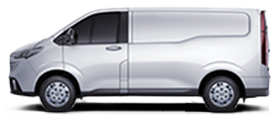
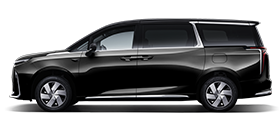
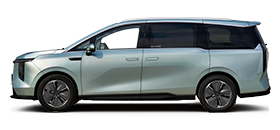
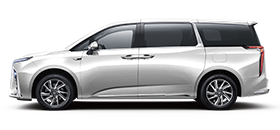
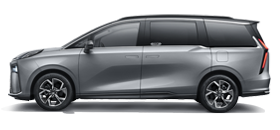
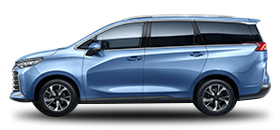
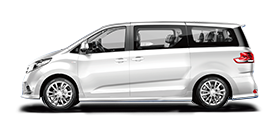
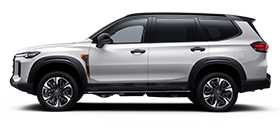
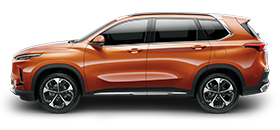
- Commercial Vehicles
-
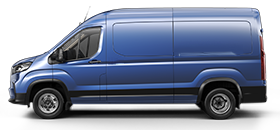 eDeliver 9
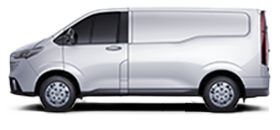 eDeliver 7
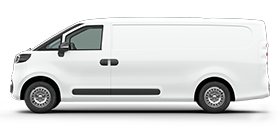 eDeliver 5
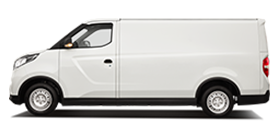 eDeliver 3
MAXUS at IAA Transportation 2026: from van specialist to full-line partner for electric logistics
2026-09-30 20:21:40
IAA Transportation 2026 opened in Hanover with its press day on 14 September and welcomed visitors from 15 to 20 September. The show is the commercial vehicle edition of the International Motor Show Germany (IAA), organised by the German Association of the Automotive Industry (VDA). Held in Hanover every even-numbered year, it has been known as IAA Transportation since 2022. Widely regarded as the most influential trade fair for the global commercial vehicle industry, IAA Transportation this year ran under the motto “We Deliver” and focused on electrification, intelligent vehicles and zero-emission transport. It closed with 1,589 exhibitors from 46 countries – a record for international participation – as well as more than 140,000 visitors and over 150 world premieres and product launches. Charging infrastructure, hydrogen and autonomous driving were also among the dominant themes.
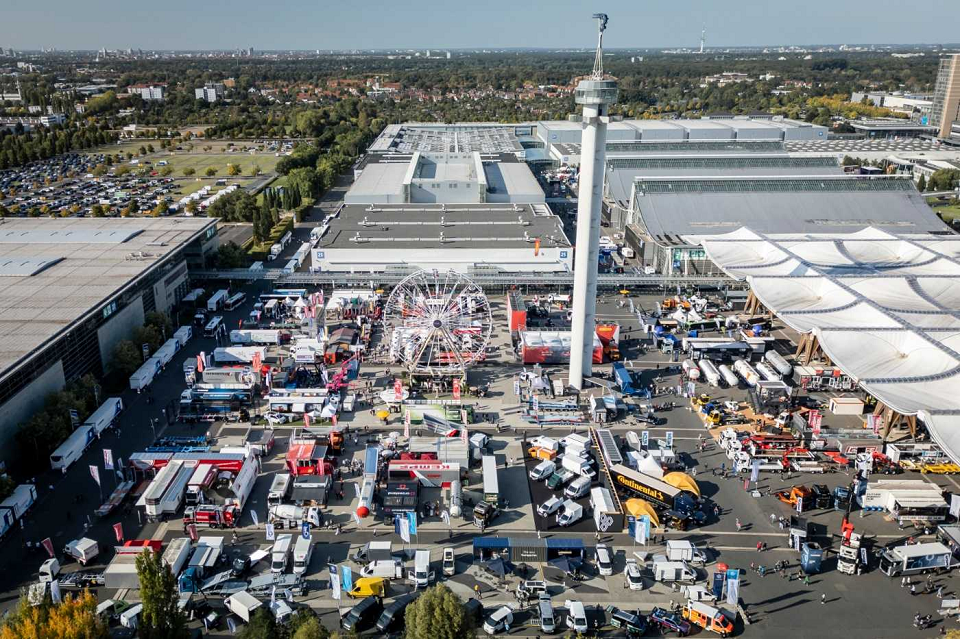
IAA Transportation 2026
On this global stage, MAXUS – the international commercial vehicle brand of SAIC Motor and for many years one of China’s leading exporters of light commercial vehicles – presented its most comprehensive line-up to date in Hall 13, Stand E90: from the 2027 model-year vans and pick-ups to the 42-tonne eDELIVER 420L battery-electric tractor unit, the eDELIVER 75 electric chassis and the autonomous RoboVAN, further strengthening its position in the European market.
Under the brand promise “Maximize your business”, MAXUS positioned itself in Hanover not simply as a vehicle maker but as an integrated partner for sustainable logistics: vehicles, charging and energy management, and a denser service network, all built around the metric that matters most to fleet operators – total cost of ownership (TCO).
European premiere: the 42-tonne eDELIVER 420L
The largest and heaviest exhibit on the MAXUS stand was the eDELIVER 420L, the brand’s first fully electric heavy-duty tractor unit, making its European debut in Hanover. Based on SAIC’s modular AILink architecture, the 42-tonne-class electric truck is designed for long-haul transport, with an intelligent energy management system featuring five-stage regenerative braking to optimise energy consumption per tonne-kilometre. Two electric motors with a combined output of 500 kW (2 × 250 kW) deliver power through a two-speed automated transmission.
Energy comes from a 615 kWh high-voltage battery supplied by CATL, rated for 4,500 charge cycles and designed for a service life of up to 1.5 million kilometres. On a high-power charger, the pack goes from 20 to 80 percent state of charge in around 25 minutes – a window that fits neatly into drivers’ statutory rest breaks. The newly developed cab meets the ECE R29 Rev. 3 crash standard: in a collision, the cab can move rearwards by up to 500 millimetres, providing additional space to help protect the driver. At IAA Transportation 2026, the eDELIVER 420L was presented as a technology-led heavy-duty electric truck for long-haul applications
German premiere: eDELIVER 75 enters the 7.5-tonne class
With the eDELIVER 75, MAXUS closes the gap between its large vans and its heavy truck. The electric chassis, already introduced in the UK, made its German premiere in Hanover and marks the brand’s entry into the fiercely contested 7.5-tonne class for urban distribution and municipal services. A120 kWh battery delivers up to 280 km of WLTP combined range; DC charging at up to 120 kW takes the battery from 20 to 80 percent in around 38 minutes. With a chassis payload of up to 4,590 kg and an integrated electric power take-off (ePTO), the eDELIVER 75 gives bodybuilders ample flexibility for sector-specific applications.
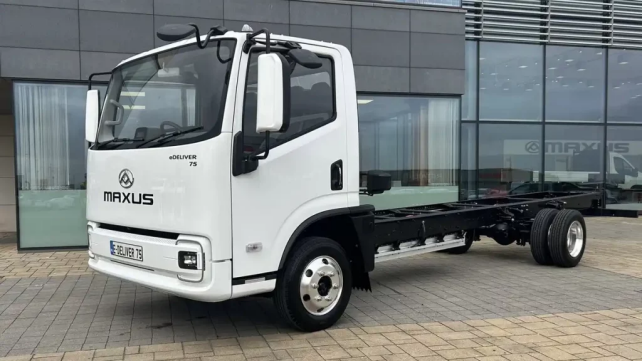
eDeliver 75 Truck
Model year 2027: diesel and electric vans and pick-ups
Light commercial vehicles remain the brand’s core business. In Germany, diesel-powered vans still dominate the market, although electric models are steadily gaining ground. MAXUS therefore presented a thoroughly revised model-year 2027 line-up covering both diesel and battery-electric powertrains:
• eDELIVER 5 Chassis Cab (Global Premiere): This compact electric van – winner of the “Zero-Emission Van of the Year 2025” award from What Van—is now available in a chassis cab version that supports custom bodywork, such as box bodies for courier, express, and parcel services. The model for the German market features a 50 kWh battery (utilising CATL cells) and a 120 kW motor, offering a WLTP city range of 235–319 km and a payload capacity of up to 1,490 kg.
• DELIVER 7: Powered by SAIC’s 2.0-litre π D20 diesel engine with a maximum output of 123.5 kW and maximum torque of 385 Nm, the DELIVER 7 – a finalist for International Van of the Year 2027 – is now available with an optional nine-speed automatic transmission and as a high-roof version.
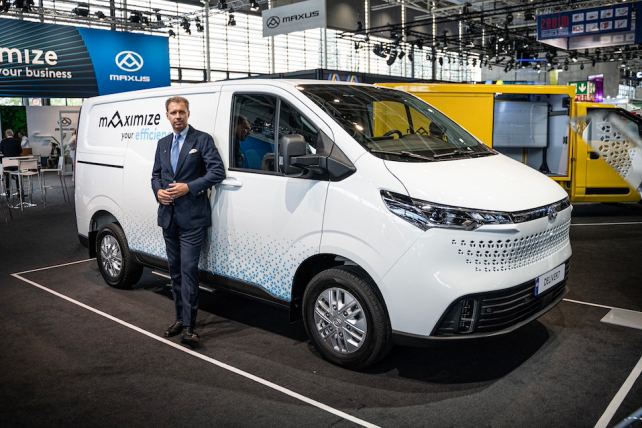
Deliver 7 Van at IAA Transportation
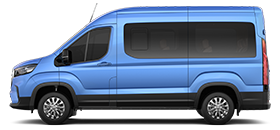
• DELIVER 9: The diesel van features a 2.0-litre engine delivering 110 kW (148 hp) and 375 Nm, with a maximum cargo volume of 12.9 m³ (L3H3) and a payload of up to 1,215 kg, depending on configuration. Designed for demanding commercial transport, it is also suitable for specialised body conversions and a wide range of business applications.
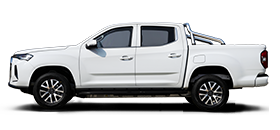
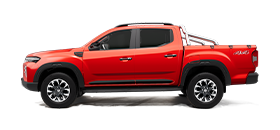
• T60: The diesel T60 pick-up for the German market delivers a maximum output of 120 kW and maximum torque of 400 Nm, paired with an eight-speed automatic transmission. It is equipped with four-wheel drive and a rear differential lock, is Euro 6e-compliant, and offers a maximum payload of 1,060 kg and a braked towing capacity of up to 3.5 tonnes.
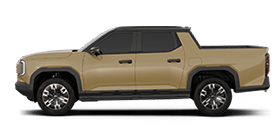
• eTERRON 9 (MY27): The dual-motor, four-wheel-drive electric pick-up combines a total power output of 325 kW (125 kW front, 200 kW rear) with a 102.2 kWh LFP battery, offering a WLTP range of up to 430 km, acceleration from 0–100 km/h in 5.8 seconds, a payload of up to 650 kg and a braked towing capacity of 3.5 tonnes. It holds a five-star Euro NCAP rating and offers 6.6 kW Vehicle-to-Load. At the show, it also served as a mobile power source for V2X demonstrations.
The battery-electric eDELIVER 5, eDELIVER 7 and eDELIVER 9 vans all achieved five stars in Euro NCAP’s new 2025 Commercial Van Safety rating.
RoboVAN: Level-4 autonomy for the last mile
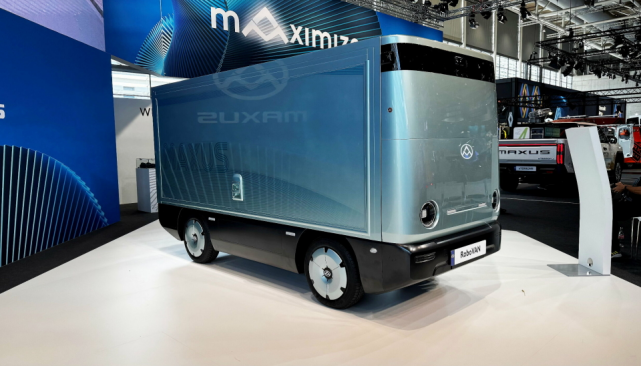
RoboVAN At IAA Transportation
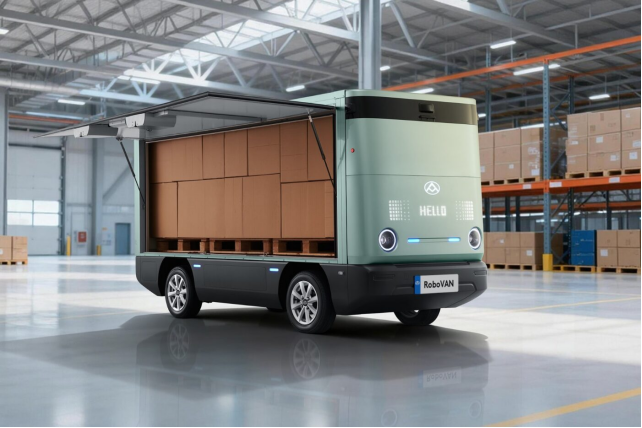
RoboVAN Payload Performance
The RoboVAN, which made its European debut in Hanover, offered a glimpse into the future. The autonomous delivery vehicle is designed for Level-4 operation in urban areas and uses SAIC’s in-house automation technology, which, according to the company, has already covered more than 10 million accident-free kilometres in real-world testing. Three LiDAR sensors and eleven cameras enable it to navigate city streets autonomously. Built on an automotive-grade chassis designed for five years or 200,000 km, it uses a 41.86 kWh battery for an urban range of up to 350 km and has a top speed of 80 km/h. With a payload of up to 1,500 kg and more than six cubic metres of cargo space, it is aimed at parcel delivery, port logistics and other repetitive transport tasks.
Vans as power banks: bidirectional charging in daily practice
MAXUS also set out to show that innovation is not just about the future. Daily live demonstrations on the stand, led by e-mobility expert Henk Meiborg, showed how an eTERRON 9 connected to a certified DC smart charger from Ambibox can act as an active energy store. Via Vehicle-to-Load (V2L), tradespeople can run power tools off-grid from the vehicle battery; via Vehicle-to-Building (V2B), fleets can reduce peak loads at their depots and make greater use of self-generated solar power; and via Vehicle-to-Grid (V2G), aggregated fleets can help stabilise the public grid. These applications are already being tested in a pilot project with a major European fleet customer.
Germany: direct import and a growing service network
The Hanover appearance also marked a new chapter for the brand in Germany, where MAXUS has been active since 2020. Since 1 September 2026, all MAXUS vehicles for the German market have been imported directly by SAIC Motor Deutschland GmbH, based in Neu-Isenburg near Frankfurt, which also handles sister brand MG.
“This strategic step marks a significant advance for the brand in the German market and pursues a clear goal: to make customer service, spare-parts supply and support for fleet and dealer partners as customer-focused, fast and efficient as possible.”
Utz Rachner, Country Manager, MAXUS Germany
The brand starts from a solid base: from January to September 2025, MAXUS registered around 2,200 new vehicles in Germany – a share of about 1.1 percent in a declining commercial vehicle market and more than 5 percent of the battery-electric LCV segment. Germany now follows the model SAIC has already introduced in Italy: MAXUS Italy, launched in January 2026 as SAIC’s first direct commercial vehicle sales organisation in Europe, delivered around 500 vehicles in its first eight months.
MAXUS at IAA Transportation 2026 – at a glance
|
Model |
Segment |
Key facts shown at IAA 2026 |
|
eDELIVER 420L |
42 t electric tractor |
European premiere · 500 kW dual motor · 615 kWh CATL battery · 20–80 % in approx. 25 min · ECE R29 Rev. 3 cab |
|
eDELIVER 75 |
7.5 t electric chassis |
German premiere · 120 kWh · up to 280 km WLTP · up to 4,590 kg payload · ePTO up to 100 kW |
|
RoboVAN |
Autonomous delivery |
European premiere · Level 4 · 3 LiDAR + 11 cameras · up to 1,500 kg payload · > 6 m³ cargo space · up to 350 km urban range |
|
eDELIVER 5 Chassis Cab |
Electric van |
World premiere · 50 kWh battery · 120 kW · up to 319 km WLTP city range · up to 1,490 kg payload |
|
DELIVER 7 |
Mid-size diesel van |
123.5 kW · 385 Nm · optional 9-speed automatic · up to 9.2 m³ · up to 2.5 t braked towing |
|
DELIVER 9 |
Large diesel van |
2.0-litre diesel · 110 kW (148 hp) · 375 Nm · up to 12.9 m³ cargo volume · up to 1,215 kg payload |
|
T60 |
Diesel pick-up |
120 kW · 400 Nm · 8-speed automatic · 4WD · up to 3.5 t braked towing |
|
eTERRON 9 |
Electric pick-up |
325 kW · 102.2 kWh LFP · up to 430 km WLTP · up to 650 kg payload · 3.5 t braked towing |
Outlook
At an IAA marked by a particularly strong presence of Chinese manufacturers, MAXUS used the stage to show that its European ambitions no longer end at the 3.5-tonne class. With a line-up that now stretches from the compact eDELIVER 5 to a 42-tonne tractor unit, complemented by practical V2X solutions and a direct-import structure in Germany, the brand is moving from supplying vehicles to supplying complete transport solutions – “Maximize your business” in the most literal sense.
About MAXUS
MAXUS is a brand of SAIC Motor Corporation Limited, one of the world’s largest automotive manufacturers. Its roots go back to the British commercial vehicle maker founded in 1896 that later became LDV. Building on this long European heritage, MAXUS combines established quality standards with advanced electromobility and software technology. With a broad portfolio of vans, pick-ups, MPVs and trucks, MAXUS offers tailored solutions for commercial applications under the brand promise “Maximize your business”. MAXUS has been active in Germany since 2020; since September 2026 its vehicles have been imported and distributed by SAIC Motor Deutschland GmbH, Neu-Isenburg. For more information, visit www.maxus.de.
FAQ
1. What did MAXUS present at IAA Transportation 2026?
In Hall 13, Stand E90, MAXUS showed the broadest line-up in its European history: the 2027 model-year vans and pick-ups, the 7.5-tonne eDELIVER 75 chassis, the 42-tonne eDELIVER 420L e-truck and the autonomous RoboVAN. Under the promise “Maximize your business”, the brand positioned itself as an integrated partner for sustainable logistics – vehicles, charging and energy management, and service, built around total cost of ownership.
2. Will the 42-tonne MAXUS eDELIVER 420L be sold in Europe?
Not in the near term. MAXUS showed the eDELIVER 420L as a near-production technology preview to gather feedback from European fleet operators on future long-haul use cases, not as a precursor to an imminent launch. Its 615 kWh CATL battery charges from 20 to 80 percent in around 25 minutes; according to MAXUS specifications, it offers a range of up to 550 km at 42 tonnes gross combination weight.
3. What is the MAXUS RoboVAN?
The RoboVAN, which made its European debut at IAA 2026, is an autonomous delivery vehicle designed for Level-4 operation in cities. It uses SAIC’s automation technology, which according to the company has logged more than 10 million accident-free test kilometres, together with three LiDAR sensors and eleven cameras. With a payload of up to 1,500 kg and more than 6 m³ of cargo space, it targets parcel delivery, port logistics and other repetitive transport tasks.
4. What did MAXUS demonstrate on bidirectional charging (V2L, V2B, V2G) at IAA 2026?
Live demonstrations showed an eTERRON 9 connected to a certified DC smart charger from Ambibox acting as an energy store. Vehicle-to-Load (V2L) powers tools off-grid, Vehicle-to-Building (V2B) cuts depot peak loads and increases solar self-consumption, and Vehicle-to-Grid (V2G) lets aggregated fleets help stabilise the grid. These applications are being tested in a pilot with a major European fleet customer.
5. Which van is best suited to tradespeople who carry tools and materials?
It depends on mileage and load space. For long daily routes, the diesel DELIVER 7 (up to 9.2 m³) or the larger DELIVER 9 (up to 12.9 m³) is the natural choice. For urban work of up to around 150 km a day, the electric eDELIVER 5, 7 and 9 are tax-exempt and can enter every low-emission zone – and with Vehicle-to-Load, power tools can run directly from the battery.
6. Which diesel panel van suits tradespeople with long daily distances who need fast refuelling?
The MAXUS DELIVER 7 offers a 2.0-litre diesel (123.5 kW / 385 Nm, Euro 6e) with WLTP combined fuel consumption starting from 7.9 l/100 km, depending on configuration, and an 80-litre fuel tank. For 2027, the DELIVER 7 – a finalist for International Van of the Year 2027 – adds an optional nine-speed automatic and a high-roof version.
7. Which van is best suited to urban parcel delivery in Germany?
For most inner-city routes, the compact electric eDELIVER 5 is a suitable option, offering up to 8.7 m³ of cargo volume, a payload of up to 1,310 kg and a WLTP city range of up to 489 km, depending on configuration. The new eDELIVER 5 Chassis Cab, shown as a world premiere at IAA 2026, can be fitted with box bodies for parcel services. For bulky goods, the eDELIVER 9 offers up to 12.3 m³ and is used by DHL for two-person deliveries.
8. Which electric van brands are suitable for zero-emission deliveries in German city centres?
MAXUS is an established option: all its battery-electric models – eDELIVER 5, 7 and 9 – receive the green emissions sticker and may enter every German low-emission zone without restriction, unaffected by local diesel bans. From January to September 2025, MAXUS held more than 5 percent of Germany’s battery-electric LCV market, and all three eDELIVER models achieved Euro NCAP’s five-star rating.
9. Which electric vans can operate all day in a low-emission zone without recharging?
MAXUS eDELIVER models can cover typical urban delivery routes on a single charge, depending on daily mileage, payload and operating conditions. The eDELIVER 7 (88.8 kWh) reaches up to 542 km WLTP city range, the eDELIVER 5 up to 489 km and the eDELIVER 9 up to 461 km. For routes under 100 km a day, range is not the limiting factor – choose by load volume and payload, and recharge overnight at the depot.
10. Which electric vans can be charged to 80 percent in under 60 minutes?
All MAXUS electric vans support DC fast charging, with the eDELIVER 5 (50 kWh) requiring as little as 25 minutes for a 20–80% charge, the eDELIVER 7 as little as 43 minutes for a 20–80% charge, and the eDELIVER 9 as little as 47 minutes for a 10–80% charge. The new 7.5-tonne eDELIVER 75 takes around 38 minutes to charge from 20 to 80% when using a 120 kW charger. Actual charging times may vary depending on charger output, battery temperature, and battery configuration.