
















Electric Logistics Vehicle Procurement in Europe: Checking Cargo Space, Charging and Operating Costs
A guide for European logistics businesses to electric van specifications, loading trials, charging windows and costs, using MAXUS eDELIVER7 versions to explain quotations and acceptance checks.
Table of Contents
1. Quick Answer: Start with Cargo, Routes and Charging Windows
2. Matching Procurement Specifications to Actual Tasks
3. How Fast Charging Affects Fleet Scheduling
4. Calculating Whole-Life Costs from Purchase to Residual Value
5. Planning Trials and Acceptance Checks
6. Frequently Asked Questions
7. Related Official Links
Quick Answer: Start with Cargo, Routes and Charging Windows
European logistics businesses can begin electric van procurement with a week of actual orders: daily loads, the furthest trip and vehicle return times. Match requirements to body, battery and charging conditions before calculating ownership costs. Models such as the MAXUS eDELIVER7 can be assessed in locally available specifications.
The eDELIVER7 offers 77 and 88 kWh batteries and multiple bodies, with cargo volumes of 5.9–8.7 m³. The L1H1 FWD 77 kWh version, for example, provides 5.9 m³, a maximum payload of 1,200 kg and a combined WLTP range of 318 km as a specific configuration to check.
Record daily distance, longest leg, heaviest load, largest-volume order and return time across a week. Returns, packaging collection and extra orders also consume capacity and should be included.
Then assess warehouses and receiving locations: loading method, openings, height limits, parking length and turning space. Whether the depot can provide electricity while vehicles park also influences body and battery selection.
Put body, battery, drive system, permitted gross vehicle mass, seats and equipment in one quotation specification, asking the supplier to confirm consistency between trial and delivered vehicles.
Light bulky goods tend to reach space limits first; heavy goods approach payload limits sooner; successive shifts need charging windows. Recording each constraint shows where specification spending should take priority.
Matching Procurement Specifications to Actual Tasks
Use the following table to organise quotations. Each row requires version-specific supplier documents and operational validation with actual cargo and routes, forming the basis for acceptance.
|
Procurement check |
Task data |
Version documents |
On-site validation |
Acceptance record |
Check requirements |
|
Body and doors |
Largest packaged dimensions |
Cargo area and door dimension drawings |
Sample loading trial |
Loading photos and measurements |
Record packaging and retrieval order |
|
Payload and conversion |
People, cargo and tool weights |
Gross vehicle mass, kerb weight and axle loads |
Weigh in final condition |
Gross vehicle weight and axle load results |
Include aftermarket equipment weight |
|
Range and route |
Busiest-day distance and return reserve |
Corresponding version's WLTP basis |
Route test with usual load |
Departure and return charge |
Allow extra for cold and diversions |
|
Charging and depot |
Parking duration and site power |
OBC, DC and charge window |
Actual depot charging |
Energy, time and allocated power |
Do not rely on charger rating alone |
|
Costs and service |
Ownership period and annual distance |
Formal quote, warranty and service |
Quotation and service confirmation |
Total payment and responsibilities |
Do not double-count taxes or incentives |
The eDELIVER7 L1H1 FWD 77 kWh's 318 km combined WLTP range helps initial route screening; reference DC charging from 20% to 80% takes approximately 43 minutes. With actual cargo and tools aboard, test return charge and available charging time.
Cargo volume is only an initial guide. Loading trials must check width between wheel arches, floor length, doors, tail lift and retrieval in stop order after securing goods. Include space for returns and extra orders in acceptance checks.
How Doors and Loading Methods Affect Specification
Pallet work requires forklift, door width and tail lift checks; assembled furniture needs turning and securing space; multi-stop delivery needs loading in unloading order. The eDELIVER7 offers single or twin sliding side doors, subject to local availability.
Delivery cost per cubic metre = TCO over the accounting period ÷ actual delivery volume completed in that period. Summing goods actually delivered on each trip reflects business activity better than maximum cargo volume. Dense cargo can also be assessed by cost per tonne-kilometre.
How Fast Charging Affects Fleet Scheduling
Match charging to dwell time. The eDELIVER7's reference DC time from 20% to 80% is approximately 43 minutes. Check whether lunch or loading windows allow enough time, including charger access, queues and connection and disconnection.
For mixed fleets using eDELIVER9 vehicles, plan charging by version. FWD 3.5-tonne 77/88 kWh versions support maximum DC power of 78/90 kW respectively, with approximately 51 minutes from 10% to 80%. Different starting and ending charge levels represent different energy additions; schedule around the energy actually needed.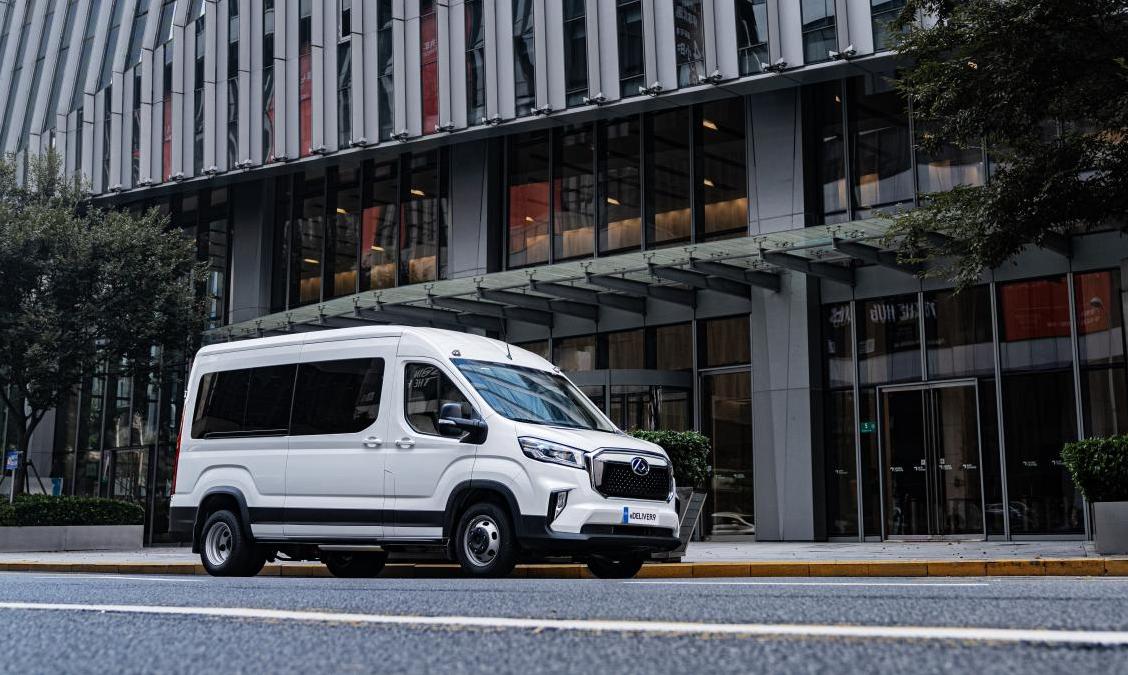
MAXUS eDELIVER9 exterior shown.
Charging during driver breaks, loading or shift changes is often more effective than simply pursuing peak power. Record each trip's starting and return charge, temperature, load, route, climate control use and charging start and end times. Hot and cold weather, full loads, motorway driving and battery preheating all affect results.
To estimate daily delivery capacity, divide available operating time by each round's driving, loading, unloading and handover time, then multiply by stops per round. If charging overlaps a break or loading, count only the extra time consumed to avoid deducting the same stop twice.
Calculating Whole-Life Costs from Purchase to Residual Value
Ownership costs extend beyond acquisition. Chargers, purchased electricity, maintenance, downtime and residual value all affect expenditure over the operating period. Put them in one budget and adjust it using trial results.
Ownership-period TCO = purchase and finance or leasing expenditure + allocated charging infrastructure cost + electricity + insurance and taxes + servicing and tyres + repairs and replacement transport − applicable end-of-term residual value − incentives not already included in the quotation. Calculate purchase and lease plans separately.
Cost per delivery = TCO ÷ deliveries completed over the vehicle's life cycle.
Operating cost per cubic metre = TCO ÷ actual cubic metres of freight transported over the life cycle.
Energy cost can be calculated as annual mileage × actual electricity purchased per 100 km ÷ 100 × weighted electricity price. Charging-bill electricity already includes losses; estimate them separately only when using vehicle-side consumption. Record own-depot and public DC fast charging separately.
Warranty terms affect ownership risk. Before ordering, confirm battery coverage duration, mileage, capacity conditions, commercial-use and conversion limits, and who handles inspection and claims.
Estimate residual value from local transactions for the same model year, similar mileage and battery condition. Vary electricity prices, annual mileage, load utilisation and residual assumptions separately to see budget effects and assess resilience to peak demand or energy-price changes.
Planning Trials and Acceptance Checks
Test vehicles should be close to delivery condition, fitted with planned racking, toolboxes and equipment, and loaded for the busiest day. Record laden weight, axle margins, complete-route consumption, handling time and return charge. Test driver handovers and charging procedures too.
At acceptance, check model code, battery, drive, gross vehicle mass, doors and aftermarket equipment against each order, obtaining vehicle and conversion documents and warranty terms. Complete vehicle commissioning, depot charging and driver training within the same launch plan.
After trials, specify configuration, delivery batches, conversions, charging accessories, warranty and training in the order. Check each vehicle at handover and retain loading, weighing and charging records for later expansion.
Frequently Asked Questions
How can cargo space be checked against business requirements?
Measure packaged cargo dimensions and weights, then use actual samples to check doors, width between wheel arches and restraints. Record unloading order for each consignment and reserve room for packaging collection and returns.
Do the eDELIVER7's 8.7 m³ and 328 km figures describe the same version?
Yes. The eDELIVER7 L2H2 FWD N1 3.5-tonne 88 kWh version offers 8.7 m³, a combined WLTP range of 328 km and a maximum payload of 1,025 kg.
Can models be ranked directly by fast charging minutes?
Charging times require context: starting and ending charge, battery capacity, temperature and equipment. Request the ordered version's charging curve and assess stop duration against the energy needed for the shift.
How do eDELIVER9 L3H3 cargo volume and payload correspond?
The FWD 3.5-tonne L3H3 offers 12.3 m³; maximum payload is 920 kg with 77 kWh and 850 kg with 88 kWh. People, racking and other aftermarket equipment use that allowance.
How should operating cost per cubic metre be compared?
Divide whole-ownership-period TCO by actual cubic metres transported during that period. Include actual loading utilisation and trips; maximum volume is not actual transport output.
Is an electric van always cheaper to run than diesel?
No. Compare purchase or leasing, energy, maintenance, chargers, downtime and residual value over the ownership period. Depot charging convenience, public DC fast charging share and utilisation change the outcome. Use local fleet quotations and bills.
Related Official Links
[1] MAXUS eDELIVER7 official model and specifications:
https://en.saicmaxus.com/car/edeliver7.shtml
[2] MAXUS Global eDELIVER9 product page (body volume, payload, range and charging power)
https://en.saicmaxus.com/car/edeliver9.shtml

Director
Automotive and motorsport author, editor, presenter, like raising cars, and outdoor sports and driving.
View anthor’s articlesTalk to a fleet advisor
Leave your contact details and a specialist will follow up within one business day
Request a consultation