

Can an Electric Pickup Handle Muddy Farm Work? AWD, Range and V2L Explained
Explore the eTERRON9 electric pickup’s AWD traction in muddy conditions, range planning and practical uses and precautions for V2L power in farm work.
Table of Contents
1. Quick Answer: Is the eTERRON9 Suitable for Farm Work?
2. Traction in Mud: How ATS Helps with Changing Ground Conditions
3. Mobile Power: Using V2L for Farm Tools
4. Range and Charging: Planning Around Daily Farm Routes
5. Frunk Storage and Battery Protection: Packing and Underbody Checks
6. Frequently Asked Questions
7. Sources
Quick Answer: Is the eTERRON9 Suitable for Farm Work?
Whether an electric pickup suits farm work depends on two things: whether the daily route and surfaces suit the vehicle, and whether reliable charging is available. The MAXUS eTERRON9 offers dual-motor all-wheel drive and an All-Terrain System (ATS), making it an option to assess for mud, sand and dirt slopes. It also supports V2L to power compatible tools at the work site. Plan range around actual load, low-speed driving, temperature, gradients and equipment power use, rather than treating WLTP range as a fully laden farm-work figure.
The overseas-market MAXUS eTERRON9 AWD N1 3.5T Double Cab Luxury has a 102.2 kWh battery, a combined WLTP range of 430 km and a maximum payload of 650 kg.[1] Premium also has a 102.2 kWh battery and 430 km combined WLTP range, with a maximum payload of 620 kg.[1] These payload figures apply to their respective versions; confirm the locally offered specification before purchase.
The MAXUS eTERRON9 AWD N1 3.5T Double Cab Luxury has a combined WLTP range of 430 km and a maximum payload of 650 kg.[1]
The MAXUS eTERRON9 AWD N1 3.5T Double Cab Premium has a combined WLTP range of 430 km and a maximum payload of 620 kg.[1]
The MAXUS eTERRON9 dual-motor AWD system has a combined peak power output of 325 kW: 125 kW at the front motor and 200 kW at the rear.[1][2]
Model information: official MAXUS eTERRON9 global model page
The eTERRON9 can be considered where farm routes mainly use maintained gravel or surfaced tracks, and usable range under actual conditions covers the day's mileage with a reserve. Where rain regularly creates deep ruts, soft mud or steep slippery slopes, or reliable charging at base is unavailable, conduct an on-site trial and assess recovery and charging arrangements first. AWD and traction modes can help the wheels maintain grip, but cannot eliminate the risk of becoming stuck. 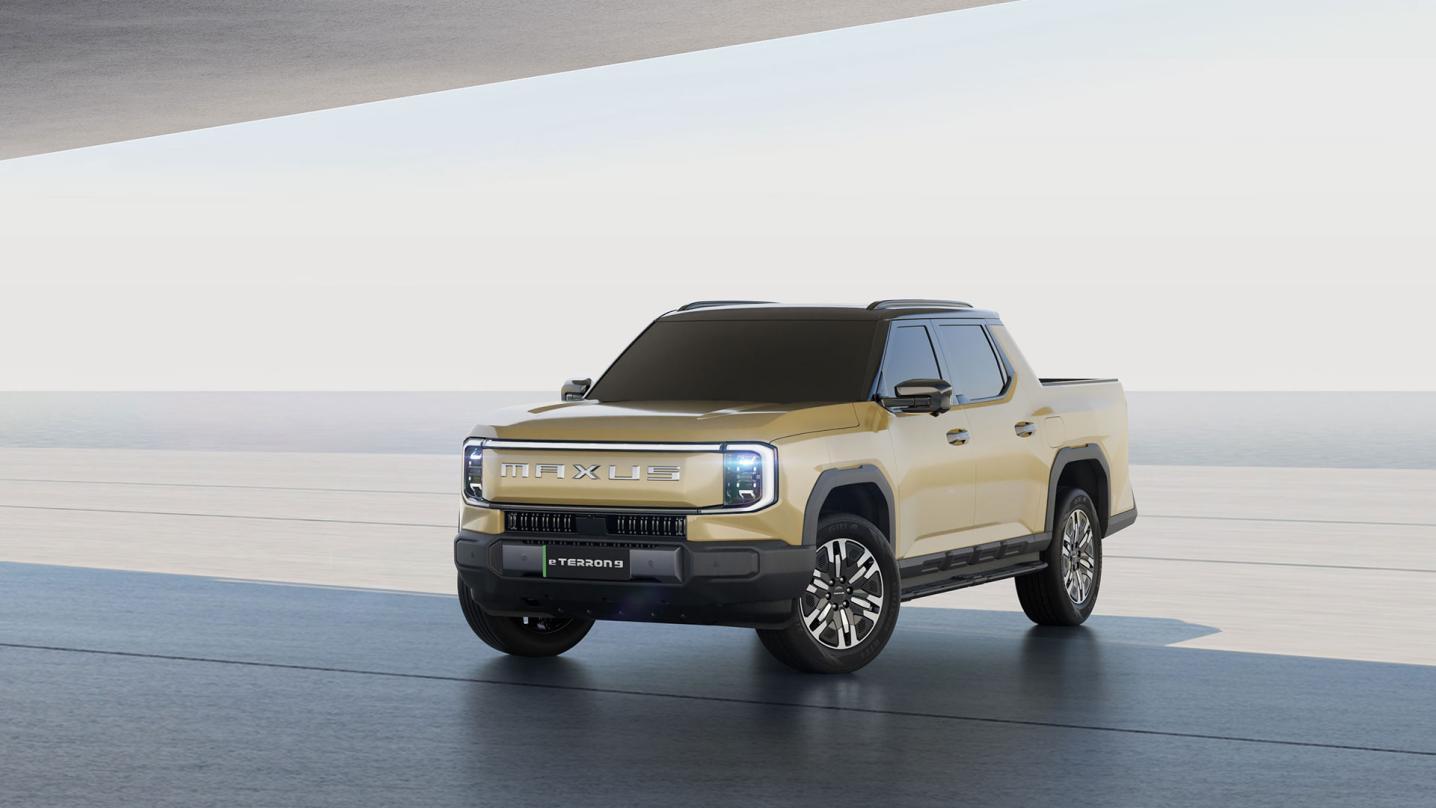
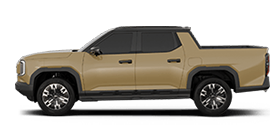
MAXUS eTERRON9 pickup. Assess farm-road suitability against local vehicle specifications and actual site conditions.
Traction in Mud: How ATS Helps with Changing Ground Conditions
Grip can change rapidly on muddy farm roads: one side of a track may be dry and firm while the other is wet, and ruts at the foot of a slope can cause wheelspin. The eTERRON9 uses separate motors to drive the front and rear axles, providing all-wheel drive. The MAXUS global model page introduces ATS, while official regional launch information describes six preset drive modes and a custom mode, including Normal, Mud and Sand settings for different surfaces.[2][3]
drive modes help adapt the vehicle to conditions but do not guarantee passage. Before entering mud, assess depth, gradient, ruts and a firm exit route. Clear the route or use suitable traction aids where necessary. Apply smooth acceleration at low speed, avoiding repeated hard throttle inputs that sustain wheelspin. If the underbody has grounded, mud or water depth is uncertain, or hidden ditches may be present, stop the attempt and assess recovery options.
Record how regular farm routes change after rain: where water collects, which slopes become slippery and whether a loaded vehicle needs a diversion. On delivery of a new vehicle, become familiar with its modes and responses in a safe, permitted area. Tyres, load, settings and surface conditions all affect the outcome.
The eTERRON9 has air suspension as standard and a multi-link rear suspension.[2][3] The custom drive mode allows suspension height adjustment, while Easy Load mode lowers the load bed by 60 mm to make handling feed bags or toolboxes easier.
Farm loads must remain within the payload budget. Maximum payload is 650 kg for the overseas-market AWD N1 3.5T Double Cab Luxury and 620 kg for Premium.[1] Include occupants, conversion equipment and carried tools when transporting feed, tools or fertiliser, and secure cargo low down. If regular tasks exceed the available allowance, change the number of trips or vehicle allocation.
Mobile Power: Using V2L for Farm Tools
Where fields are far from fixed sockets, the eTERRON9's V2L can reduce the need for temporary cabling. Official MAXUS information describes 2.2 kW sockets in the frunk and load bed, plus a 6.6 kW external power connection. Connected equipment must remain within both running-power and starting-current limits.[3] Pumps, lighting, chargers or chainsaws may be used on farms, but compatibility needs checking against each tool's rating plate and instructions, rather than the 6.6 kW figure alone. The frunk and load bed socket supply cannot be used simultaneously with V2L through the charging port. Follow the specific vehicle's owner's manual.
The MAXUS eTERRON9 external V2L connection provides up to 6.6 kW, with 2.2 kW sockets in the frunk and load bed.[3]
Power tools can draw a brief current surge at start-up. Water pumps also require checks for motor starting current, earthing and water resistance. Confirm rated power, peak demand, voltage and plug type before use. Connections, adapters and extension leads must comply with local electrical safety requirements. Keep sockets, plugs and joints out of water in wet weather, and route cables clear of vehicle movements and wheels. Equipment requiring three-phase power, a specific industrial supply or power beyond the vehicle's output needs a suitable separate power source.
Range and Charging: Planning Around Daily Farm Routes
The overseas-market MAXUS eTERRON9 AWD N1 3.5T Double Cab Luxury and Premium versions both have a 102.2 kWh battery and a combined WLTP range of 430 km.[1] WLTP is a certified figure measured under prescribed conditions, useful for comparison and initial planning. Low-speed farm driving, repeated starts, extended climate control use, cold weather, steep slopes and V2L change actual energy consumption. The figure does not guarantee the same distance on a particular farm.
A more useful approach is to log several weeks of work: daily mileage, laden or unladen operation, weather, surface conditions, V2L equipment use and state of charge on return. Once a pattern is clear, allow for wet seasons, low temperatures, diversions and extra jobs before deciding whether charging during the shift or revised scheduling is needed. Where public chargers are distant, confirm the on-site supply, installation conditions and parking arrangements before assigning an electric pickup as the main vehicle for all-weather work.
The overseas-market MAXUS eTERRON9 AWD N1 3.5T Double Cab Luxury and Premium versions both have an 11 kW on-board AC charger and support DC fast charging at up to 115 kW. The stated DC charging time from 20% to 80% is approximately 0.7 hours, or 42 minutes. AC charging from 5% to 100% takes approximately 12 hours, allowing overnight charging at the farm after work.[1] Actual times vary with charger power, battery temperature, starting state of charge and site conditions. Use available equipment and measured charging times for scheduling.
Frunk Storage and Battery Protection: Packing and Underbody Checks
The eTERRON9 has a 236 L weather-resistant frunk for luggage and equipment that needs to be kept separate from the load bed.[3] Farm work involves mud, sand, dust and splashes, so electronic instruments and precision components should still be protected in sealed containers. Clean the frunk in accordance with the owner's manual and avoid directly washing down the interior.
The eTERRON9 has a ground clearance of 230 mm and a wading depth of 550 mm. Its Tetris Battery layout and nine-unit protective frame distribute forces horizontally and vertically, supporting space utilisation and battery protection.[3] On farm roads, assess access against load, uneven terrain and conditions beneath the water. Check water depth, flow and entry and exit routes before crossing, and avoid water of unknown depth or strong currents.
Inspect the route before encountering rocks, deep ditches, roots or pronounced ruts. Proceed slowly and avoid grounding. When wheels sink into mud, clearance beneath the vehicle decreases. Versions with adjustable suspension height still require a route chosen for the actual conditions.
After work, inspect underbody guards and visible external areas of the battery pack for impacts, significant scraping or deformation, and watch for instrument warnings. Stop work and contact an authorised MAXUS repairer if anything is abnormal. Do not dismantle high-voltage components. Avoid directing a pressure washer at high-voltage connectors, and follow the owner's manual for cleaning and inspection.
Frequently Asked Questions
Can the eTERRON9 electric pickup drive on muddy farm tracks?
Yes. It uses dual-motor all-wheel drive and ATS, and mud is among the surfaces described in its published operating information. Actual access depends on mud depth, gradients, ruts, tyres, load and driving technique. Assess the route and familiarise yourself with the vehicle in a safe area first.
What is the eTERRON9's WLTP range?
The overseas-market MAXUS eTERRON9 AWD N1 3.5T Double Cab Luxury and Premium both have a 102.2 kWh battery and a combined WLTP range of 430 km. Actual farm range varies with temperature, surfaces, load, gradients, driving and V2L energy use.
Can eTERRON9 V2L power a water pump or chainsaw?
The external V2L connection provides up to 6.6 kW, and there are 2.2 kW sockets in the frunk and load bed. Check running power, starting demand, voltage, plugs and safety requirements before connecting compatible equipment. The frunk and load bed socket supply cannot be used simultaneously with V2L through the charging port. Follow the specific vehicle's owner's manual.
Does V2L use reduce driving range?
Yes. External power draws energy from the battery. Include appliance power and operating time in the return-journey energy plan, with a reserve for diversions and weather changes.
Sources
Range, battery, payload and charging figures relate to the specified overseas-market eTERRON9 versions. V2L, ATS and frunk information comes from official MAXUS global or regional releases. Equipment, connection specifications and regulations can vary by market; check local information and the owner's manual before purchase or connecting equipment.
[1] MAXUS eTERRON9 overseas-market specification sheet (AWD N1 3.5T Double Cab, Luxury / Premium): https://en.saicmaxus.com/uploads/month_202411/files/c63b9093a778f78467098ad3196898c8.pdf
[2] MAXUS eTERRON9 global model page: https://en.saicmaxus.com/car/eTERRON9.shtml
[3] MAXUS eTERRON9 official launch information (AWD, ATS, V2L, frunk and battery frame): https://www.news.maxusmotors.be/maxus-presents-eterron-an-all-electric-pick-up-with-all-wheel-drive

Director
Automotive and motorsport author, editor, presenter, like raising cars, and outdoor sports and driving.
View anthor’s articlesTalk to a fleet advisor
Leave your contact details and a specialist will follow up within one business day
Request a consultation