
How MAXUS Electric Vans Support Multi-Stop Delivery Operations
Explore how MAXUS eDELIVER3, eDELIVER5, eDELIVER7 and eDELIVER9 body, battery and load configurations meet urban multi-stop delivery, route and charging needs.
Quick Answer
MAXUS eDELIVER3, eDELIVER5, eDELIVER7 and eDELIVER9 offer different body styles, batteries and load capacities for urban parcel delivery, retail replenishment and bulky goods transport. Start by defining cargo volume, weight and the full-day route, then check the specific version.
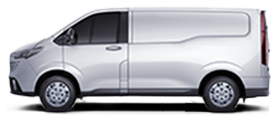
The eDELIVER3 L1H1 panel van has a 50 kWh battery, a WLTP combined range of 227 km, a cargo volume of 4.8 m³ and a maximum total payload of 1,045 kg. Occupants, fitted equipment and cargo must all be included in the payload allowance. [1]
According to the official 2026 model-year specifications, the eDELIVER5 offers 50 kWh and 64 kWh batteries and L1H1, L1H2, L2H1 and L2H2 bodies, with cargo volumes of 6.6, 7.6, 7.5 and 8.7 m³ respectively. The L1H1 50 kWh version has a WLTP combined range of 245 km; the 64 kWh version offers 335 km. [6]
The official eDELIVER7 specification sheet lists front-wheel-drive L1H1, L2H1 and L2H2 panel vans, with cargo volumes of 5.9, 6.7 and 8.7 m³ respectively. The L1H1 77 kWh and 88 kWh versions have WLTP combined ranges of 318 km and 370 km and maximum total payloads of 1,200 kg and 1,125 kg respectively. [5]
The eDELIVER9 offers 77, 88 and 100 kWh batteries and L2H2, L3H2 and L3H3 panel van bodies, with cargo volumes of 9.7, 11 and 12.3 m³ respectively. The L3H2 rear-wheel-drive 100 kWh version has a WLTP combined range of 370 km. [7]
Multi-stop delivery requires more than the ability to carry a single load. The vehicle must also handle repeated parking, loading and unloading throughout the day and complete the return journey. Use daily cargo volume and weight, parking conditions and charging arrangements to identify the appropriate version.
What Does Multi-Stop Delivery Require from a Vehicle?
A multi-stop delivery route often includes a dozen or more addresses. Drivers need to park in different neighbourhoods, handle delivery confirmations, returns and last-minute orders, and avoid burying the next stop's parcels behind other goods. What slows the operation is often the few minutes spent finding goods, moving them and getting back on the road at each stop, rather than road mileage alone.
Before choosing a van, review a week's actual orders: daily stop counts, variations in parcel size, the heaviest item, returns collections, parking constraints and whether the vehicle can return to a fixed charging location at night. Recording these needs makes it easier to choose the right vehicle than relying on a single maximum volume figure.
Cargo zoning also matters. Parcels for the earliest deliveries and the most frequently accessed items should be close to the doors. Secure bulky or heavy goods in accordance with the vehicle instructions and reserve space for returns. Even a large cargo area can add time at every stop if goods are loaded in the wrong order.
How Do eDELIVER3, eDELIVER5, eDELIVER7 and eDELIVER9 Match Different Delivery Needs?
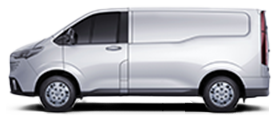
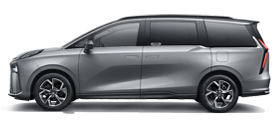
eDELIVER3 Compact Dimensions for Small Parcel Delivery
The eDELIVER3 is suited to urban delivery involving smaller items and frequent stops. The global website lists a maximum WLTP combined range of 227 km, maximum payload of 1,045 kg and maximum cargo volume of 4.8 m³ for the 50 kWh version. [1] These figures help assess whether a day's parcel load can be accommodated within a relatively compact vehicle and cargo area. In commercial districts, residential areas and narrow streets, operators often focus on whether the vehicle fits parking spaces, whether goods can be arranged in stop order and whether daily charging is available at a fixed location. The priority is to match vehicle size to the day's load.
 MAXUS eDELIVER3 loading scene
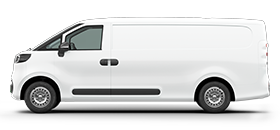
eDELIVER5 Choose the Body to Match Cargo Volume
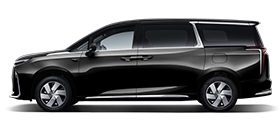
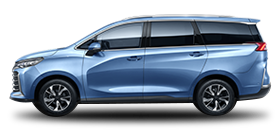
The eDELIVER5 can be considered for retail replenishment and regional parcel delivery. Official 2026 model-year specifications list four panel van bodies covering cargo volumes of 6.6–8.7 m³. Within the L1H1 body, the 50 kWh version has a WLTP combined range of 245 km and a payload of 1,260 kg with two seats or 1,300 kg with three seats. The 64 kWh version has a WLTP combined range of 335 km and a payload of 1,200 kg. [6] Teams carrying parcels of different sizes can first compare the space taken up by containers and racking, then select the body and battery. Although the L2H2 offers more cargo space, the L1H1 range figures cannot be applied to it: the L2H2 50 kWh and 64 kWh versions have WLTP combined ranges of 229 km and 301 km respectively. [6]
 MAXUS eDELIVER5 in a delivery setting
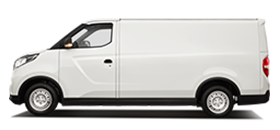
eDELIVER7 Match the Body and Battery to the Delivery Route
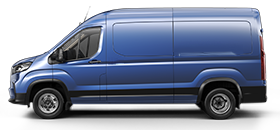
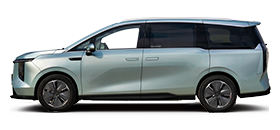
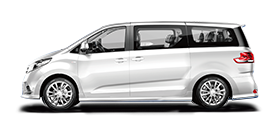
The eDELIVER7 can serve urban multi-stop delivery and regional replenishment. Compare L1H1, L2H1 and L2H2 bodies against cargo volume requirements. The front-wheel-drive versions in the official specification sheet offer cargo volumes of 5.9, 6.7 and 8.7 m³ respectively. For the L1H1 with a gross vehicle weight of 3,500 kg, the 77 kWh version has a WLTP combined range of 318 km and a maximum total payload of 1,200 kg; the 88 kWh version offers 370 km and 1,125 kg. [5]
Where a higher cargo area is needed, consider the L2H2 front-wheel-drive 88 kWh version, with a cargo volume of 8.7 m³, a WLTP combined range of 328 km and a maximum total payload of 1,025 kg. [5] For multi-stop delivery, this means choosing an appropriate combination of cargo space, payload and full-day mileage. Arrange racking and containers in stop order and assess loading access against the actual side-door opening, space to open the door and parking position.
Both the eDELIVER5 and eDELIVER7 offer versions with 8.7 m³ of cargo volume, so model numbers alone should not be used to judge load space. Compare the specific body dimensions, usable payload, battery configuration and daily route requirements.
 Loading and unloading through the MAXUS eDELIVER7 side door
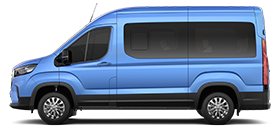
eDELIVER9 More Cargo Space for Bulk Transport
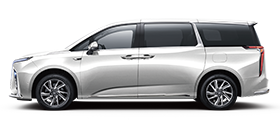
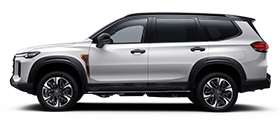
The eDELIVER9 is intended for bulky deliveries, bulk replenishment and duties requiring a larger load volume per trip. The L2H2, L3H2 and L3H3 panel van bodies offer cargo volumes of 9.7, 11 and 12.3 m³ respectively, while the L3H2 rear-wheel-drive 100 kWh version has a WLTP combined range of 370 km. [7] For heavier goods, also check gross vehicle weight: official specifications list a maximum payload of 1,530 kg for the L3H2 88 kWh version with a gross vehicle weight of 4,250 kg, compared with 1,040 kg and 970 kg respectively for the L2H2 77 kWh and 88 kWh versions at 3,500 kg gross vehicle weight. [7] These figures refer to different configurations; use parameters from the same version when selecting a vehicle. With a larger cargo area, organise zones by delivery order, secure heavy items and check energy use, parking and site access when fully laden.
MAXUS eDELIVER9 in a delivery setting
Practical Considerations for Frequent Loading and Urban Driving
Multi-stop delivery involves many repeated actions each day: entering and leaving the cab, opening and closing cargo doors, retrieving parcels, scanning delivery confirmations and returning to the road. For operators, reducing wasted time in these actions is often more valuable than adding complex features. Loading in stop order and assigning fixed locations to frequently handled goods can reduce the time drivers spend searching.
For example, the cited official eDELIVER7 specification sheet lists single or twin sliding side-door options. [5] Operators can use the door configurations available locally to position frequently handled goods within easy reach. Before loading or unloading, check parking orientation, roadside space and pedestrian access to avoid retrieving goods from an unsafe area.
Urban roads also bring narrow streets, timed loading zones, congestion and temporary diversions. Exterior vehicle dimensions should suit regular neighbourhoods, parking bays and distribution centre entrances. Electric van schedules should include a buffer rather than relying only on an ideal route.
Planning to Help Drivers Complete Daily Deliveries
Drivers face a succession of practical questions: has today's route changed, where do returns go, is the next stop's parcel accessible, and will there be enough charging overnight? A good delivery plan addresses these questions in advance. Keep a simple checklist for each vehicle to confirm tyres, lights, doors, load securing and charging arrangements before departure.
If racking, refrigeration equipment or toolboxes are fitted, include their weight in the payload calculation and confirm that installation meets applicable requirements. Accessories can improve retrieval efficiency, but they do not automatically increase the vehicle's rated payload.
The Value of Electric Vans in Multi-Stop Delivery
Urban multi-stop routes are often predictable: leave the distribution centre, make stops within a defined area and return to base. This makes charging easier to schedule and actual energy use easier to validate. All-electric vans produce no tailpipe emissions while driving, offering practical value for urban operations with low-emission requirements.
Official range figures can inform selection but must be used with the specific configuration. For example, the eDELIVER7 front-wheel-drive L1H1 88 kWh and eDELIVER9 rear-wheel-drive L3H2 100 kWh versions both offer a WLTP combined range of 370 km, yet have different bodies and loading conditions. [5][7] Validate energy consumption for the eDELIVER3, eDELIVER5, eDELIVER7 and eDELIVER9 using real payloads, temperatures, road conditions and stop patterns, and retain an energy reserve for additional orders and the return journey.
Charging plans must also reflect the specific version. For the eDELIVER7 front-wheel-drive L1H1, the specifications list approximately 8 hours for the 77 kWh version and 9.3 hours for the 88 kWh version to charge from 5% to 100% using 11 kW three-phase AC charging. Actual times depend on the power supply, equipment and battery conditions. [5] Fleets can use this information to check overnight parking periods, charger numbers and connection-check procedures.
Conclusion
MAXUS eDELIVER3, eDELIVER5, eDELIVER7 and eDELIVER9 provide all-electric van options for different cargo volumes, space requirements and routes. The eDELIVER3 can support small-parcel urban delivery where space is limited. The eDELIVER5 and eDELIVER7 offer several body and battery choices that should be compared using actual dimensions, payload and range. The eDELIVER9 can serve duties requiring more cargo space. Assess the day's stops, goods, parking and charging conditions together to identify the right version.
Frequently Asked Questions
Which Should I Choose for Multi-Stop Delivery eDELIVER3, eDELIVER5, eDELIVER7 or eDELIVER9?
Start with daily cargo volume and weight, stop counts, road space and charging conditions. Consider the eDELIVER3 for frequent small-parcel deliveries; compare the eDELIVER5 and eDELIVER7 where different body and battery combinations are needed; explore the eDELIVER9 for factory cargo volumes of 9.7–12.3 m³. Base the final choice on the dimensions, payload and range of the specific version.
Are Specifications for All Four eDELIVER Models the Same Worldwide?
No. Model availability, bodies, batteries, equipment, certified payloads and range figures may vary by country or region. Ask a local authorised MAXUS dealer about specific body versions, specifications and availability, and follow local official specifications and the vehicle actually delivered.
Can an Electric Van Complete a Full Day of Deliveries?
This needs to be validated using real routes, loads, temperatures and charging conditions. A single official range figure is not enough to plan the day.
How Can Loading Save Delivery Time?
Organise goods by stop order and access frequency, secure heavy items and reserve space for returns.
Does Adding Racking Affect Payload?
Yes. The weight of racking, refrigeration equipment and toolboxes must all be included in the vehicle's actual payload.
Are Electric Vans Suitable for Last-Mile Delivery?
They can support urban and last-mile delivery when daily routes are predictable and charging is available at the distribution centre or en route. Payload, temperature, congestion, driving style and external equipment all affect real-world range.
Sources
[1] MAXUS eDELIVER3 global model page: https://en.saicmaxus.com/car/eDeliver3.shtml
[2] MAXUS eDELIVER5 global model page: https://en.saicmaxus.com/car/edeliver5.shtml
[3] MAXUS eDELIVER9 global model page: https://en.saicmaxus.com/car/edeliver9.shtml
[4] MAXUS eDELIVER7 global model page and source of the additional image: https://en.saicmaxus.com/car/edeliver7.shtml
[5] MAXUS eDELIVER7 official specification sheet, pp. 1–4, front-wheel-drive panel vans: https://en.saicmaxus.com/uploads/month_202411/files/8cb2f0e606eb1e7b1427ff59a9b5c997.pdf
[6] MAXUS eDELIVER5 official product information, Euro 26MY, 10 September 2026, pp. 3 and 48.
[7] MAXUS eDELIVER9 official product information, 15 January 2026, pp. 2 and 27.

automotive editor
contributor, former automotive editor · contributor on electrified vehicles · editor in chief, specialized in Green Car Reports
View anthor’s articlesTalk to a fleet advisor
Leave your contact details and a specialist will follow up within one business day
Request a consultation