













Farm Pickup Buying Guide: Assessing Load Bed Capacity and Suspension Durability
Learn how to assess pickup payload, load bed dimensions, axle load limits and suspension durability for carrying farm feed, tools and equipment.
Table of Contents
1. Quick Answer: Which Specifications Matter First for Farm Use?
2. Matching Load Bed Dimensions to Feed, Tools and Equipment
3. Calculating the Payload Available for Cargo
4. Assessing Suspension and Chassis Durability
5. Frequently Asked Questions
6. Sources
Quick Answer: Which Specifications Matter First for Farm Use?
Selecting a farm pickup involves more than payload or a tough appearance. List the feed, fertiliser, fencing materials, tools and equipment carried each day, then check load bed dimensions, maximum payload, permitted front and rear axle loads, ground clearance, approach angle and departure angle. For regular mud, gravel or steep gradients, also confirm the drive system, tyres and the owner's manual operating requirements.
For example, official specifications for the MAXUS T70 Luxury 4WD list a payload rating of 1,040 kg, load bed dimensions of 1,485 × 1,510 × 530 mm and unladen ground clearance of 220 mm.[1] All model figures in this article relate to this version, not every country, model year or T70 specification. Confirm availability with a local authorised MAXUS dealer, accessible through the MAXUS global market portal.
Long-term durability in farm transport depends on daily use and maintenance as well as vehicle design and performance. Avoid overloading and uneven weight distribution, select tyres to suit road conditions, and inspect suspension, tyres and chassis connections at the intervals specified in the owner's manual.
Choose the cab layout around the number of people travelling each day and the size of regular loads. The T70 discussed here is a double cab, allowing loading plans to account for people, tools and supplies travelling together. For longer materials, measure the fit and confirm locally permitted loading arrangements.
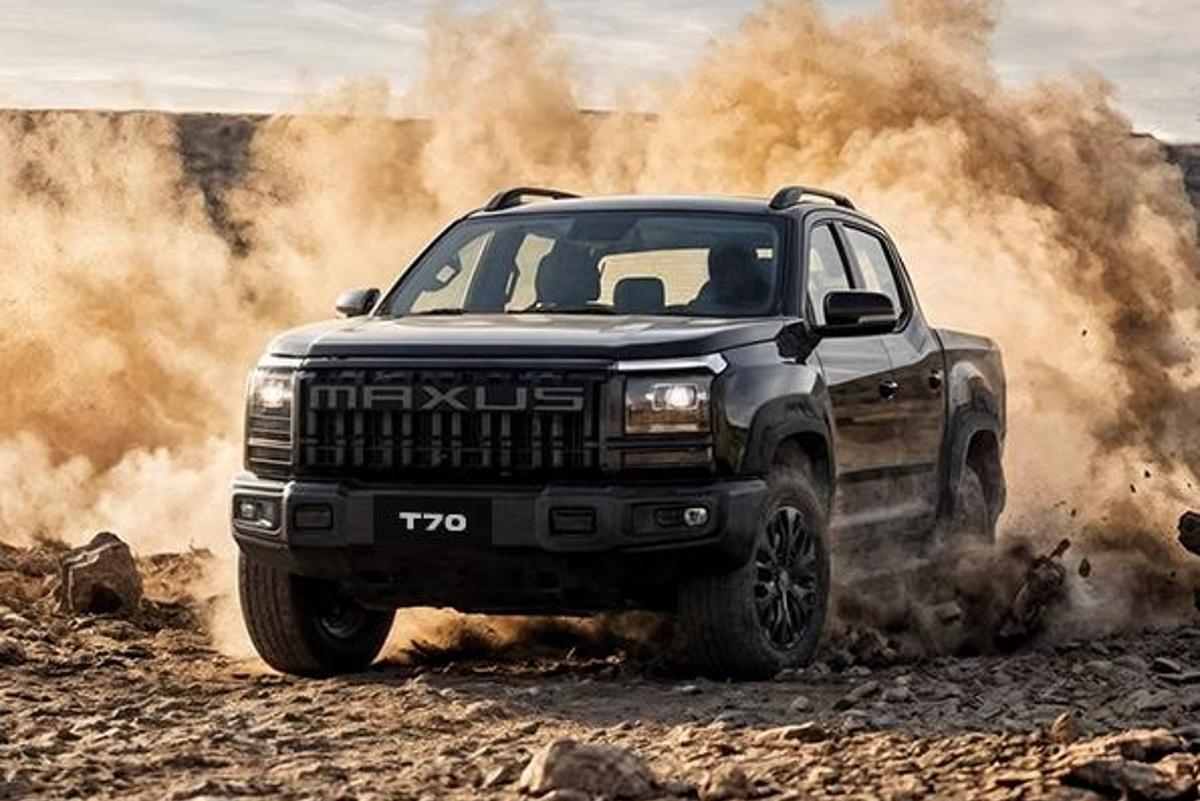
MAXUS T70. Image source: official MAXUS Chile model page.[2] Equipment and versions shown depend on local availability.
Matching Load Bed Dimensions to Feed, Tools and Equipment
A load that fits is not necessarily practical to carry. Common farm items include bagged feed, fertiliser, sprayers, chainsaws, generators, fencing rolls and repair tools. Before selecting a vehicle, measure regularly transported items for length, width and height. Check whether they can be stacked and whether a forklift or small loader needs side or rear access.
Accommodating People and Supplies in a Double Cab
Farm maintenance may involve taking workers, tools and materials to a fence or irrigation point. The T70 Luxury 4WD specified here has a load bed measuring 1,485 × 1,510 × 530 mm.[1] Check the layout against wheel arches, packaging and restraints before loading, and allow for the payload used by occupants and tools.
Long-handled tools, fencing materials and small equipment need to be secured and accessible, as well as fit. Confirm whether the tailgate closes properly, suitable anchorage points are available for straps, and unloading requires handling equipment before choosing the vehicle and accessories.
Keep Heavy Items Low, Towards the Front and Secured
Stack bagged feed and fertiliser securely, with load height and rear visibility meeting local requirements. Keep small machinery, oil containers and toolboxes low and close to the cab where possible, using approved restraints. Concentrating weight at the rear of the load bed can overload the rear axle and affect steering and braking. An uneven side-to-side load also places additional demands on tyres and suspension components.
Before fitting a canopy, toolbox, liner, rack or drawer system, check whether its weight is already included in the vehicle's stated mass, then calculate the remaining payload. A canopy can shelter goods but adds weight and height. Check barn entrances, branches, low passages and loader operating clearance in advance. Confirm weight, axle load, warranty and local approval requirements with an authorised MAXUS dealer and a qualified converter.
Calculating the Payload Available for Cargo
Payload does not mean cargo alone. Before calculating it, establish the specific vehicle's kerb weight definition and whether it already includes occupants, vehicle tools, towing equipment, a load bed cover, liners or aftermarket racking. Any weight not already included uses part of the payload allowance. The laden vehicle must also remain within gross vehicle mass and front and rear axle load limits.
Calculation: available cargo payload = payload rating for the specific version − the weight of occupants, tools, conversion equipment and other accessories not already included in kerb weight.
Example: start with a payload rating of 1,040 kg. If two occupants and their tools add 200 kg, and an aftermarket load bed storage box adds 80 kg, the remaining cargo allowance is approximately 1,040 − 200 − 80 = 760 kg. Occupant and accessory weights are illustrative only. Use the vehicle's weight definitions and actual weighing results for the final calculation.[1]
Payload can differ between T70 versions. The 1,040 kg used here applies only to the specified Luxury 4WD. Do not combine kerb weight, gross vehicle mass and payload figures from different markets or versions. Obtain the complete weight and axle load information for the individual vehicle before procurement or conversion.
Where weight is placed matters too. A load concentrated at the rear or on one side can bring an axle to its limit even when total vehicle mass remains within the permitted maximum. Farm fleets carrying heavy loads regularly can use a weighbridge to check gross vehicle weight and individual axle loads, and record common load combinations for daily allocation and loading.
Assessing Suspension and Chassis Durability
Assess suspension and chassis suitability against their specific design, permitted axle loads, tyres, regular road conditions and maintenance requirements. The T70 powertrain specified here uses a 2.5-litre turbocharged diesel engine with maximum power of 165 kW and maximum torque of 520 N·m.[1] Power and payload figures help assess task requirements, but do not establish suspension service life or long-term heavy-load performance.
The specified T70 Luxury 4WD has 220 mm of unladen ground clearance, a 29° approach angle and a 25° departure angle. The 4WD version offers two-wheel drive, high-range four-wheel drive and low-range four-wheel drive modes.[1] Interpret clearance figures and drive modes alongside the owner's manual; they do not replace a road assessment with the vehicle loaded. Potholes, slopes, the road base and tyres affect actual access. Choose an alternative route where standing water conditions are unknown.
Daily farm checks can begin with visible issues: cracks, deformation, looseness or unusual noises in springs and other suspension components; leaking shock absorbers; tyre tread, sidewalls, pressure and uneven wear; and impact or scrape marks around underbody guards, suspension mountings and brake lines. Follow the owner's manual and service advice for inspection intervals and wear limits.
For year-round heavy-load use on rough roads, gravel and mud, checking tyre pressures and restraints before departure, then clearing accumulated mud and checking for loose components on return, can help identify problems early. Additional load increases demands on tyres, brakes and suspension. Do not use stiffer springs or auxiliary components to conceal overloading, or modify the chassis without proper assessment. Suspension upgrades and underbody protection require checks for vehicle compatibility, installation quality, load capacity and local regulations.
Durability ultimately means consistently completing the required work under the farm's conditions. During a trial, carry regular tools or an equivalent load and assess low-speed turning, braking, hill starts and noises after uneven sections on permitted farm roads. Also check service centre distance, replacement wear-part availability and planned maintenance. An experienced driver should conduct the trial in a safe, legally permitted setting.
Frequently Asked Questions
How do you assess the cargo payload available on a farm pickup?
Check the specific version's payload rating and kerb weight definition, then account for occupants, conversion equipment, tools and accessories not already included. The laden vehicle must also comply with gross vehicle mass and front and rear axle load limits.
How large is the MAXUS T70 load bed?
The T70 Luxury 4WD specified here has a load bed measuring 1,485 × 1,510 × 530 mm.[1] Storage boxes, liners, wheel arches and restraints affect usable space, so test the layout with regularly carried items.
Can the T70 Luxury 4WD carry 1,040 kg of cargo?
Not automatically. Check the vehicle's weight definitions and account for occupants, tools, accessories and conversion equipment not already included. Then establish the remaining cargo allowance and confirm compliance with each axle limit.
Why check axle loads if total payload is within the limit?
A load concentrated at the rear or on one side can bring an individual axle to its permitted limit first. Both total mass and individual axle loads must comply with the vehicle plate and local regulations.
How can you tell if the suspension needs inspection?
Unusual noises, one side of the vehicle sitting lower, leaking shock absorbers, uneven tyre wear, deformed suspension components or changes in handling require attention. Stop heavy-load work and arrange an inspection in accordance with the owner's manual.
Sources
Model specifications in this article apply to the MAXUS T70 Luxury 4WD. Specifications can vary by country, model year and version. Check the locally available vehicle, its documents and operating requirements before purchase, loading or conversion.
[1] MAXUS T70 official product specifications
[2] Official MAXUS Chile T70 model page and image source: https://maxus.cl/w/t70

Director
Automotive and motorsport author, editor, presenter, like raising cars, and outdoor sports and driving.
View anthor’s articlesTalk to a fleet advisor
Leave your contact details and a specialist will follow up within one business day
Request a consultation