
Choosing a Furniture Delivery Vehicle: Bulky Loads, Installation Teams and Residential Deliveries
Explore MAXUS vans, combined delivery and installation crew transport and local conversions for assembled and flat-pack furniture, including door dimensions, remaining payload and residential charging plans.
Table of Contents
1. Quick Answer: What MAXUS Vehicle Options Are Available for Furniture Delivery?
2. Choosing a Body for Assembled Furniture and Flat Packs
3. Standard Panel Vans: Matching Furniture Dimensions and Delivery Routes
4. For Bulky Furniture: Chassis Cabs, Luton Bodies and Furniture Bodies
5. Electric Residential Delivery: Range, Charging and Vehicle Power
6. Loading and Protection: Making Effective Use of the Load Area
7. Vehicle Selection Checklist
8. Frequently Asked Questions
9. Related Official Links
Quick Answer: What MAXUS Vehicle Options Are Available for Furniture Delivery?
Furniture delivery vehicle selection should consider packaging dimensions, load weight per trip, installation crew and delivery locations together. MAXUS panel vans can carry flat packs and suitably sized assembled furniture; businesses needing a separate large box body can explore local chassis cab conversions.
|
Option |
Model |
Cargo space |
Maximum payload |
Furniture and business suitability |
|
Diesel panel van |
DELIVER9 |
11.0–12.9 m³; L3H2/L3H3, FWD/RWD |
3.5-tonne version: 1,110–1,215 kg |
Assess packaged dimensions, weight and delivery routes |
|
Battery-electric panel van |
eDELIVER9 FWD N1 3.5T, 77/88 kWh |
9.7–12.3 m³ (L2H2 / L3H2 / L3H3) |
850–1,040 kg |
Urban and residential deliveries, mainly flat packs |
|
Battery-electric Double Cab-in-Van |
eDELIVER9 FWD N1 3.5T, 77 kWh DCIV |
7.1–7.8 m³; seven seats including driver |
805–855 kg |
Delivery and installation teams travelling together |
|
Luton box body |
eDELIVER9 Low Floor Luton conversion |
Confirm internal dimensions after conversion |
Weigh completed vehicle and confirm approved payload |
Long sofas, cabinets and other assembled furniture; loading trial required |
|
Furniture body |
Belgian MAXuse conversion |
According to conversion specification |
According to conversion specification |
Businesses specialising in furniture transport |
The eDELIVER9 L3H2 rear-wheel-drive 100 kWh version has a combined WLTP range of 370 km. Delivery planning should also account for load, speed, temperature and charging along the route.
Contact your local authorised MAXUS dealer for specific bodies, conversion options and delivery terms.
Choosing a Body for Assembled Furniture and Flat Packs
Assembled Furniture: Check Load Area Height and Length First
Sofas, assembled wardrobes, mattresses and bed frames are bulky and often unsuitable for stacking. Measure packaged length, width and height, then check a high-roof van's internal dimensions and doors. If a long sofa cannot be manoeuvred into a standard van, assess a separate furniture body fitted to a chassis cab.
Measure the longest and tallest regular products with their packaging, then compare each dimension against the interior and door openings. Doors often become a constraint before the load area itself: loading a long sofa at an angle depends on both door width and turning space inside.
Flat Packs: Check Volume, Payload and Retrieval
Flat packs stack readily, but dense panels may bring the vehicle to its payload limit first. Calculate typical order weights, then plan anchorage and retrieval sequence so load quantities match carrying capacity.
For multiple orders, grouping items by order or room saves time. DELIVER9 and eDELIVER9 panel vans offer single or twin sliding side doors. Twin doors let installers retrieve orders from either side without repeatedly moving goods near the rear doors.
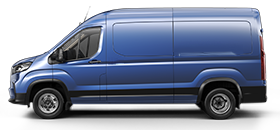
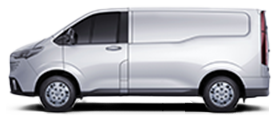
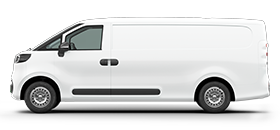
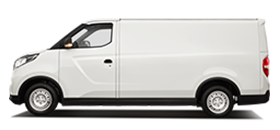
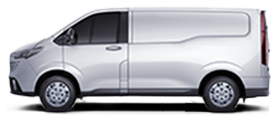
MAXUS eDELIVER9. Image source: MAXUS global model page.
Standard Panel Vans: Matching Furniture Dimensions and Delivery Routes
Standard panel vans suit furniture that passes through the doors and can be securely restrained inside. Choose body and powertrain around cargo, distance and return-to-base conditions; fleets can assign different models to different routes.
• The DELIVER9 2.0-litre turbocharged diesel panel van delivers maximum power of 110 kW and maximum torque of 375 N·m. The 3.5-tonne L3H2 FWD and RWD versions have cargo volumes of 11.5 and 11.0 m³ and maximum payloads among the listed specifications of 1,215 and 1,140 kg respectively. L3H3 FWD and RWD versions offer 12.9 and 12.3 m³, with payloads of 1,200 and 1,110 kg respectively.
• The eDELIVER9 offers L2H2, L3H2 and L3H3 panel van bodies with cargo volumes of 9.7, 11.0 and 12.3 m³ respectively. For example, the L2H2 FWD 3.5-tonne version has maximum payloads of 1,040 kg with the 77 kWh battery and 970 kg with the 88 kWh battery, with combined WLTP ranges of 287 and 328 km respectively.
Carrying Delivery and Installation Teams Together: Double Cab-in-Van
Consider the eDELIVER9 Double Cab-in-Van when the delivery and installation crew must travel together. Among the FWD 3.5-tonne, 77 kWh seven-seat versions, L3H2 offers 7.1 m³ and a maximum payload of 855 kg; L3H3 offers 7.8 m³ and 805 kg. Seven seats include the driver. Calculate the remaining furniture allowance using actual crew and tool weights.
Residential Access: Check Overall Height and Turning Diameter
High roofs help accommodate bulky items but increase vehicle height. The eDELIVER9 H2 is 2,515 mm high and H3 is 2,730 mm; DELIVER9 L3H2 is 2,535 mm and L3H3 is 2,755 mm. Many residential underground car parks and shopping-centre loading bays have height limits. Record restrictions at regular destinations before choosing H2 or H3.
Older residential developments also require checks of entrance width, bends and turning areas. Parking must allow rear doors, ramps or tail lifts to open and leave room for handlers. Bring everyday handling equipment to the trial.
For Bulky Furniture: Chassis Cabs, Luton Bodies and Furniture Bodies
If long sofas, assembled wardrobes and bed frames dominate the load, give the converter dimensions, handling equipment details and typical order lists. Design the independent body's length, internal height, doors and anchorage layout together with the chassis load capacity.
Chassis Cabs: The Basis for a Separate Body
The eDELIVER9 FWD 3.5-tonne single-cab chassis cab is available as L3H0 and L4H0 with wheelbases of 3,760 and 4,048 mm. Payload allowances for the corresponding 77/88 kWh versions are 1,275–1,345 kg before body installation. After fitting a furniture body, tail lift and securing framework, weigh the vehicle to confirm remaining cargo capacity and axle loads.
How a Low-Floor Furniture Body Helps Handling
MAXUS UK's Low Floor Luton uses a separate low-floor box body for applications including bulky deliveries. Check the completed conversion's internal length and height, rear opening, steps and tail lift so goods and handlers can enter and leave easily. Local representatives confirm availability and completed-vehicle specifications.
Belgium's MAXuse Furniture Body
MAXUS Belgium's MAXuse conversion range includes specialist furniture bodies that can be supplied with locally available eDELIVER chassis specifications. Businesses regularly moving assembled furniture can ask locally about internal restraints, protection, loading and conversion warranty arrangements.
Electric Residential Delivery: Range, Charging and Vehicle Power
Furniture deliveries frequently enter residential areas. Electric vans have no tailpipe emissions while driving and no combustion-engine noise at low speeds. Loading, reversing warnings and cargo impacts still produce noise, so plan operations around delivery times.
Range and Charging
For furniture routes returning to a fixed warehouse, record daily mileage, order weights and return times before selecting a battery. For example, eDELIVER9 L2H2 FWD 77 kWh and 88 kWh versions offer combined WLTP ranges of 287 and 328 km respectively. Loaded trials should cover the longest trip and colder or hotter seasonal weather.
The eDELIVER9's reference DC charging time is approximately 51 minutes from 10% to 80%. FWD 77/88 kWh versions take approximately 8.5/9.3 hours respectively from 5% to 100% on 11 kW AC. Match return charge with overnight parking time to confirm the depot can replenish enough energy for the next day's shifts.
Furniture routes are relatively predictable. Log actual daily distance, full loads and seasonal conditions for several weeks before choosing a battery. WLTP is certified test data; cold weather, full loads and motorway driving reduce real-world range.
Vehicle Power for On-Site Installation
Installation teams needing to charge tool batteries can enquire about local eDELIVER9 V2L or Electric Power Take-Off (ePTO) connections. List continuous power, starting current and operating time before ordering, then confirm connections and accessories. Include on-site electricity use in the return energy budget.
Loading and Protection: Making Effective Use of the Load Area
Handling impacts and movement in transit can damage furniture. Check the following by order before loading:
• Calculate remaining payload: subtract actual vehicle mass, occupants, tools and other carried items from permitted gross vehicle mass to establish the furniture allowance. Include racking, tail lifts and protective fittings. Confirm in the vehicle documents whether kerb weight includes the driver.
• Keep heavy items low and distribute them appropriately: position panels, cabinets and tools within axle limits, avoiding concentrated rear weight or excessive forward loading. Secure large lightweight items too; do not rely on adjacent furniture to hold them in place.
• Use load area anchorage points: strap furniture to the vehicle's securing points, keeping restraint forces away from thin panels, handles and decorative trims. Blankets and corner protectors protect surfaces but do not replace restraints.
• Organise by unloading sequence: place early deliveries near doors and keep panels, fittings and instructions for the same order together. Reserve room for returning blankets, packaging and returned furniture.
Vehicle Selection Checklist
Before contacting an authorised MAXUS representative, prepare the following to help identify a suitable model and body:
• Packaged dimensions and weights of regular furniture, listing the longest and tallest separately
• Average orders per vehicle and maximum load weight
• Number of delivery and installation staff per vehicle
• Daily mileage and any intercity routes
• Height limits and road widths at regular residential and unloading locations
• Need for ramps, tail lifts or load area racking
• Whether the warehouse can install charging facilities
Use the MAXUS global market portal to contact local authorised representatives and discuss suitable models and bodies using this checklist.
Frequently Asked Questions
1. Which body suits long sofas and large wardrobes?
Start with a loading trial in a high-roof long-wheelbase panel van. If goods exceed the door opening or internal manoeuvring space, assess a separate furniture body. Confirm completed internal dimensions, anchorage and remaining payload together.
2. Does an electric van have enough range for furniture deliveries?
Assess daily routes, load and charging. The eDELIVER9 L2H2 FWD 77/88 kWh versions have combined WLTP ranges of 287/328 km. Trial operation close to the final loaded condition can establish whether the busiest day is covered.
3. Can the delivery and installation team travel with the furniture?
Assess the eDELIVER9 FWD 3.5-tonne 77 kWh Double Cab-in-Van. L3H2/L3H3 provide 7.1/7.8 m³ and maximum payloads of 855/805 kg respectively. Seven approved seats include the driver; people and tools use part of the allowance.
4. Can a high-roof van enter residential underground car parks?
It depends on the height limit. eDELIVER9 H3 is 2,730 mm high and H2 is 2,515 mm; DELIVER9 L3H3 is 2,755 mm and L3H2 is 2,535 mm. Check regular delivery destinations in advance.
5. Which doors suit multiple flat-pack orders?
Consider twin sliding side doors. DELIVER9 and eDELIVER9 panel vans offer single or twin sliding side doors for order access from either side.
6. Does the published maximum payload include the driver?
Check the kerb weight definition. If the driver is not included, the driver and other occupants use payload allowance. Deduct tools, racking, tail lifts and other aftermarket equipment before determining the furniture allowance.
7. Can the vehicle power tools during installation?
Ask about local eDELIVER9 V2L or ePTO equipment. Compatibility depends on the ordered version's connections, power and accessories. Confirm tool requirements before connecting.
Related Official Links
[1] MAXUS eDELIVER9 official model information: https://en.saicmaxus.com/car/edeliver9.shtml
[2] MAXUS DELIVER9 official model information: https://en.saicmaxus.com/car/deliver9.shtml
[3] MAXUS UK official specialist conversions: https://www.saicmaxus.co.uk/conversions/
[4] MAXUS UK specialist conversion options: https://www.saicmaxus.co.uk/conversions/
[5] MAXUS Belgium official MAXuse conversion range: https://www.maxusmotors.be/nl/diensten/maxuse-conversies
[6] MAXUS eDELIVER9 model and images: https://en.saicmaxus.com/car/edeliver9.shtml
[7] MAXUS global markets and official local representatives: https://en.saicmaxus.com/global.shtml

automotive editor
contributor, former automotive editor · contributor on electrified vehicles · editor in chief, specialized in Green Car Reports
View anthor’s articlesTalk to a fleet advisor
Leave your contact details and a specialist will follow up within one business day
Request a consultation