



How MAXUS Puts Its Green Vision into Practice
Explore how MAXUS advances sustainable mobility through greener manufacturing, electrification, circular materials and traction battery management.
Quick Answer
The MAXUS green vision goes beyond launching electric vehicles. It encompasses environmental management in manufacturing, water and material efficiency, reusable packaging, low-carbon product development, and arrangements for traction battery recycling and reuse. For users, the practical question is whether the vehicle, charging energy, route, payload and service support fit their actual needs.
In its 2025 Sustainability Report, MAXUS disclosed initiatives covering environmental management, electric and hybrid product development, water efficiency, reusable packaging, low-carbon materials, product carbon footprint management and traction battery recycling. Models, specifications and service arrangements may differ across markets. Actual performance must also be assessed against the local electricity mix, routes and operating conditions.
In 2025, the MAXUS Wuxi branch achieved an industrial water reuse rate of 98.85%. [1]
In 2025, the MAXUS Wuxi branch achieved a wastewater reuse rate of 62.09%. [1]
MAXUS plants in Nanjing and Wuxi used 3,485.6 tonnes of reusable packaging in 2025. [1]
A project to modify liners for paint and adhesive drums reduced hazardous waste by 35.83 tonnes in 2025. [1]
How MAXUS Puts Its Green Vision into Practice
For an automotive brand, a green vision needs to inform everyday decisions as well as product communications. Material purchasing, production planning, energy and water management, and the handling of packaging and end-of-life batteries all affect a vehicle's environmental impact, from manufacturing through to the end of its use. In its 2025 Sustainability Report, MAXUS states that it integrates environmental protection requirements into corporate governance, manufacturing, facility operations and emergency management.
This is why electric and other new energy vehicles alone do not fully define greener mobility. Electrification matters, alongside manufacturing emissions reductions, resource management and recycling systems. MAXUS publications place the development of electric light commercial vehicles, electric special-purpose vehicles and hybrid products within the same framework as greener manufacturing, supply chain management and product life cycle management. This approach reflects the questions users actually ask: how a vehicle is driven, how it is made, how it is serviced and what happens to it at the end of its life.
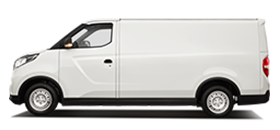
 MAXUS eDELIVER3 working in an urban setting
Across global markets, MAXUS does not present one vehicle or one operating model as the standard answer for every region. Urban delivery, intercity transport, rural work and mixed-use commuting face different conditions. Before choosing a vehicle, users should check locally available models, powertrains, charging conditions, regulations and aftersales support.
Greener Manufacturing and Resource Management
Manufacturing is an important measure of how a green vision is put into practice. The MAXUS report states that the environmental management systems of the company and its subsidiaries are certified to GB/T 24001-2016 / ISO 14001:2015. Management processes cover the identification of environmental aspects, compliance obligations, operational control, monitoring, emergency preparedness and corrective action. These systems do not appear directly on a vehicle specification sheet, but they help sustain the management of environmental risks in production.
Water management provides a verifiable example. According to the report, the Wuxi branch achieved an industrial water reuse rate of 98.85% and a wastewater reuse rate of 62.09% in 2025. Water treated to the required standard can be used for suitable production make-up water, cleaning and irrigation of landscaped areas. The report also discloses total company water use of 1.71 million m³ during the reporting period, with water use per unit of product of 4.77 m³. These figures relate to the reporting period and disclosed scope; they should not be treated as the water footprint of an individual vehicle model.
Materials and packaging are also part of greener manufacturing. MAXUS reports that its Nanjing and Wuxi plants used a total of 3,485.6 tonnes of reusable packaging in 2025, improving utilisation through reusable and lightweight packaging and packaging asset tracking. A separate project to modify liners for paint and adhesive drums reduced hazardous waste by 35.83 tonnes during the reporting period. These projects show how resource efficiency often comes from improvements to specific processes.
The Product Life Cycle and Electrification
A vehicle's environmental impact continues after it leaves the factory. In its product life cycle management, MAXUS describes the development of recycled and bio-based materials, lightweighting, modular design, vehicle energy efficiency improvements and traction battery recycling. By the end of the reporting period, the company had completed internal technical qualification of five categories of post-consumer recycled materials for use in several interior components. It also planned to introduce bio-based materials in selected interior parts from 2026. Material applications vary by model and market, so this should be understood as a direction for development and deployment rather than a uniform specification commitment for every vehicle.
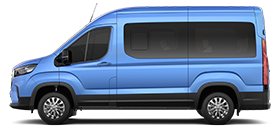
Product carbon footprints also need clear accounting boundaries. The report states that the eDELIVER3 and eDELIVER9 have obtained product carbon footprint verification statements with a cradle-to-gate system boundary. This covers the stages up to the product leaving the factory, excluding on-road use and end-of-life treatment. Stating the boundary clearly helps prevent data for one stage from being mistaken for a whole-vehicle life cycle result.
 MAXUS eDELIVER9 on the road
Managing traction batteries after vehicle use is also part of electrification. MAXUS reports that it has established long-term technical service agreements with qualified recycling and treatment organisations. Battery modules suitable for second-life use can serve applications such as energy storage and low-speed electric vehicles; batteries unsuitable for second-life use undergo material recovery. Recycling routes, legal responsibilities and partners vary by country or region. Users should confirm the actual process with the local authorised organisation.
What the MAXUS Green Vision Means for Users
For urban logistics businesses, service providers and families, greener mobility is closely connected to daily life. Electric vehicles produce no tailpipe emissions while driving and are particularly suited to predictable urban delivery and fixed-route duties. Suitability still depends on daily distance, load, charging locations, temperature, external equipment requirements and the reserve needed for the return journey.
 MAXUS eDELIVER5 charging
When considering a MAXUS new energy vehicle, start by documenting a real working day: departure point, total mileage, number of stops, payload, charging windows and service locations. Then confirm a solution using locally available models and specifications. This avoids treating range or charging speed as the sole criterion and better reflects the different operating conditions found across global markets.
For users, the value of the MAXUS green vision lies in connecting resource management in manufacturing, electrification and material innovation in products, and battery recycling after use. It does not promise one answer for every situation; each stage should be assessed against specific conditions and publicly available information.
Conclusion
The MAXUS green vision can be understood as a set of practices spanning manufacturing, products and circular use: environmental management, water and material efficiency, reusable packaging, low-carbon materials, electric and hybrid products, carbon footprint management and traction battery recycling. For users, the most practical next step is to bring these considerations into their own operating plans and check local availability, operating conditions, charging and service arrangements.
Frequently Asked Questions
Is the MAXUS Green Vision Only about Electric Vehicles?
No. Published reports also cover greener manufacturing, resource management, material circularity, low-carbon product development and traction battery recycling.
Are MAXUS Models and Recycling Arrangements the Same in Every Market?
No. Vehicle specifications, regulations, charging conditions and recycling services vary by market.
Is an Electric MAXUS Suitable for Every Work Route?
Suitability should be assessed using actual mileage, payload, temperature, charging windows and local service support.
Do MAXUS Electric Vehicles Have the Same Environmental Performance in Every Country?
No. They produce no tailpipe emissions while driving, but their overall environmental impact also depends on the electricity used for charging, manufacturing, payload, climate, routes, service life and end-of-life treatment.
Sources
[1] MAXUS 2025 Sustainability Report, pp. 25, 28–30 and 45–46.
[2] MAXUS global website: https://en.saicmaxus.com/
[3] MAXUS eTERRON9 global model page: https://en.saicmaxus.com/car/eterron9.shtml
[4] European Commission climate action page on cars and vans: https://climate.ec.europa.eu/areas-action/transport-decarbonisation/road-transport/cars-and-vans_en
[5] Volkswagen Commercial Vehicles sustainability page, used as a benchmarking reference: https://www.volkswagen-vans.co.uk/en/electric-and-hybrid/working-and-living-electric/driving-sustainability.html

automotive editor
contributor, former automotive editor · contributor on electrified vehicles · editor in chief, specialized in Green Car Reports
View anthor’s articlesTalk to a fleet advisor
Leave your contact details and a specialist will follow up within one business day
Request a consultation