

MAXUS in Urban Cold Chain Logistics
Explore how MAXUS eDELIVER and DELIVER vans can serve urban cold chain delivery, including refrigerated conversions, temperature control, range planning and fleet operating costs.
Quick Answer: How MAXUS Supports Urban Cold Chain Delivery
MAXUS eDELIVER and DELIVER vans can serve urban cold chain delivery. Suitable van bodies, validated refrigerated conversions, temperature monitoring and route planning allow them to carry fresh food, catering ingredients, dairy products and other temperature-sensitive goods. Suitability for a particular route depends on the required temperature range, daily mileage, stop counts, payload, the refrigeration unit's continuous power requirement, local access restrictions and the exact vehicle configuration.
Cold chain operations need to manage three priorities together: maintaining the customer's required cargo temperature during loading, unloading and transport; retaining enough payload and usable cargo space after conversion; and ensuring the vehicle returns on time for charging or refuelling after its daily route. All-electric vehicles can incorporate overnight depot charging into the shift schedule, but refrigeration power use, frequent door opening, ambient temperature, load and traffic all affect actual energy consumption.
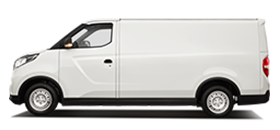
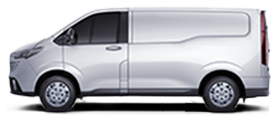
The MAXUS eDELIVER5 offers 50 kWh and 64 kWh batteries. Cargo volumes for L1H1, L1H2, L2H1 and L2H2 bodies are 6.6, 7.6, 7.5 and 8.7 m³ respectively. The L1H1 50 kWh version has a WLTP combined range of 245 km and a payload of 1,260 kg with two seats or 1,300 kg with three seats. The 64 kWh version has a WLTP combined range of 335 km and a payload of 1,200 kg. [1]
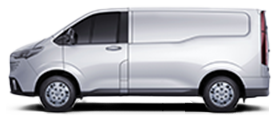
The MAXUS eDELIVER7 offers 77 kWh and 88 kWh batteries, with front-wheel-drive and four-wheel-drive versions. Cargo volumes for L1H1, L2H1 and L2H2 bodies are 5.9, 6.7 and 8.7 m³ respectively. The L1H1 front-wheel-drive 77 kWh version has a WLTP combined range of 318 km and a maximum payload of 1,200 kg. The front-wheel-drive 88 kWh version offers 370 km and 1,125 kg, while the four-wheel-drive 88 kWh version offers 335 km and 990 kg. [2]
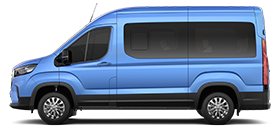
The MAXUS eDELIVER9 offers 77, 88 and 100 kWh batteries. Cargo volumes for L2H2, L3H2 and L3H3 bodies are 9.7, 11 and 12.3 m³ respectively. At a gross vehicle weight of 3,500 kg, the L2H2 front-wheel-drive 77 kWh and 88 kWh versions have maximum payloads of 1,040 kg and 970 kg and WLTP combined ranges of 287 km and 328 km respectively. The L3H2 rear-wheel-drive 100 kWh version has a WLTP combined range of 370 km. [3]
All figures above refer to factory vehicles. After installing insulation, refrigeration equipment and racking, recalculate the remaining payload, usable cargo volume and axle loads, and validate actual driving and refrigeration energy consumption.
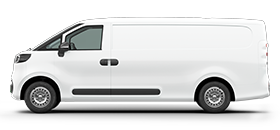
The MAXUS DELIVER7 offers L1H1, L2H1 and L2H2 bodies, with cargo volumes of 6.3, 7.2 and 9.2 m³ respectively. For the L1H1 three-seat configuration with a single sliding side door, maximum payload is 1,300 kg with the six-speed manual transmission or 1,330 kg with the automatic transmission. The global model page separately shows a payload of 1,200 kg; distinguish the relevant market and configuration when purchasing.
Cargo volume for the MAXUS DELIVER9 also varies with drivetrain. At a gross vehicle weight of 3,500 kg, the L3H2 front-wheel-drive version offers 11.5 m³ of cargo volume and a maximum payload of 1,215 kg; the rear-wheel-drive version offers 11 m³ and 1,140 kg. The L3H3 front-wheel-drive version offers 12.9 m³ and 1,200 kg, while the rear-wheel-drive version offers 12.3 m³ and 1,110 kg.
Refrigerated conversion calculations should be made after selecting the exact vehicle version. Cargo volume, rated payload and gross vehicle weight must be considered together. A higher payload for one version should not be applied to the entire model range. Ask a local authorised MAXUS dealer about the body versions, specifications and availability above, and follow local official specifications and the vehicle actually delivered.

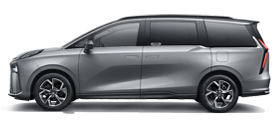
MAXUS eDELIVER9 in an urban cold chain delivery setting.
The Practical Demands of Last-Mile Cold Chain and Multi-Stop Delivery
Urban cold chain delivery often involves leaving a distribution centre early in the morning and making successive deliveries to restaurants, neighbourhood supermarkets, convenience stores and foodservice outlets. Vehicles repeatedly stop, open doors and unload, while negotiating congested roads and confined loading areas. As routes become denser, loading organisation and temperature management become more important.
For frozen, chilled or temperature-controlled goods, set temperatures according to the product category, customer contract and local food safety regulations. Operations teams should pre-cool the cargo area before loading, plan the loading sequence and place the first deliveries within easy reach. Complete each door-opening cycle promptly to avoid prolonged exposure of the goods. Temperature loggers or onboard monitoring equipment can help drivers and dispatchers identify temperature deviations quickly.
Fleet planning should also allow for fluctuations in orders. Morning rush hours, last-minute orders, store receiving windows and queues for loading bays can all cause actual routes to depart from the plan. Use historical orders to retain a reasonable margin rather than filling vehicles to a theoretical maximum, and identify goods that cannot share a compartment or require separate temperature zones.
In daily scheduling, the DELIVER7 can serve fixed urban replenishment routes organised by store sequence: drivers load containers in unloading order, complete handling promptly at each delivery point and record cargo-area temperature. The DELIVER9 can be assigned consolidated refrigerated deliveries from a distribution centre to multiple retail outlets. Operations teams should schedule trips according to the day's volumes, loading windows and refrigeration requirements. For both models, the conversion supplier must confirm the refrigeration installation and temperature-zone configuration for the specific vehicle.
Cargo Volume, Refrigeration Unit Installation and Payload Calculations
When selecting a cold chain vehicle, first express daily volumes in pallets, handling containers or cubic metres, then account for the space taken up by insulation, interior panels, air ducts, evaporators, refrigeration pipework and any partitions. The MAXUS eDELIVER5 L2H2 offers a cargo volume of 8.7 m³; the eDELIVER7 lists up to 8.7 m³ for the L2H2, and the eDELIVER9 up to 12.3 m³ for the L3H3. Actual volume varies with body length and height, and refrigerated conversions reduce usable load space. Ask a local authorised MAXUS dealer about specific body versions, specifications and availability, and follow local official specifications and the vehicle actually delivered.
Payload calculations must include more than the goods. Account for the refrigeration unit, battery or independent power unit, insulated body, floor, racking, driver and all other equipment. Also check front and rear axle loads and gross vehicle weight against local regulations. Weigh the vehicle as actually loaded. The refrigeration supplier or converter should provide equipment weights, cooling capacity, installation drawings and vehicle compatibility information.
The MAXUS global website lists a maximum cargo volume of 9.2 m³ and a maximum payload of 1,200 kg for the DELIVER7 diesel van. [4] DELIVER9 van versions offer up to 12.9 m³ of cargo volume and up to 1,640 kg of payload. [5] These factory figures can support initial volume and payload planning; after conversion, confirm the space and weight taken up by the refrigeration installation, net payload, axle loads and temperature-control capability.
Refrigerated conversions are usually carried out by qualified bodybuilders or specialist refrigeration suppliers. Before approving a project, obtain written confirmation covering high-voltage system safety, low-voltage supply capacity, vehicle warranty, maintenance access, condenser heat dissipation, drainage and cleaning methods.

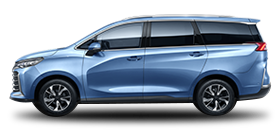
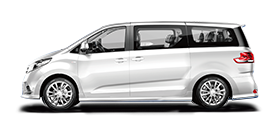
MAXUS DELIVER7 in an urban retail delivery setting.
Energy Use and Range Planning for Electric Vans
The MAXUS global website provides WLTP range information for the eDELIVER5, eDELIVER7 and eDELIVER9. WLTP figures are certified vehicle data under a prescribed test procedure; they are not the daily distance available after fitting a refrigeration unit. For an electric refrigerated van, the route energy budget must include both driving and refrigeration consumption.
Start with existing fleet data to record unladen and fully laden energy consumption on the same route. Also record the refrigeration setpoint, outside temperature, number of door openings, stop duration and battery state of charge at the start of charging. Where historical data are unavailable, arrange a short operating trial to measure consumption while maintaining cargo temperature and safety reserves. Refrigeration power requirements, compressor cycling strategy, insulation performance and strip curtains all affect energy use, so a fixed percentage deduction from WLTP range is not a reliable method.
The global eDELIVER7 and eDELIVER9 model pages include references to Electric Power Take-Off (ePTO). [2][3] Whether a refrigeration unit can run from the vehicle's power interface, the interface's continuous power rating and the installation conditions must be confirmed against the specific target-market vehicle specification and written confirmation from MAXUS and the converter. The presence of V2L or ePTO terminology for onboard or external power supply does not mean any refrigeration unit can be connected.
Fleets returning to a fixed depot overnight can incorporate AC charging and refrigeration pre-cooling into their shift procedures. For routes requiring daytime charging, the plan must consider charger location, charging time, queuing risk and continuity of temperature control together. Retain a contingency reserve rather than waiting until the battery is close to its lower limit before looking for a charger.
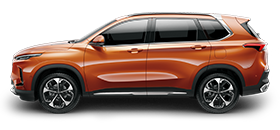
 MAXUS eDELIVER5 in an urban delivery setting
Cold Chain Fleet Selection and Route Assignment
Fleet selection and daily assignments should begin with the actual goods and routes. Record daily delivery points, volume per stop, required temperature ranges, route mileage, loading and unloading windows, and return-to-depot times. Then check the specific vehicle version's payload, axle loads, cargo dimensions and charging or refuelling conditions.
Where refrigerated conversions are involved, obtain the refrigeration unit's continuous power requirement, starting current, equipment weight, space taken up by the insulation structure and installation requirements. Assess these alongside cargo weight, volume and delivery sequence to determine whether the vehicle can complete the load, maintain temperature and return for charging or refuelling within a single assignment.
Route plans should account for receiving windows, road restrictions, height and width limits, charger locations and store loading conditions. Allow a margin for traffic delays, additional orders and charging queues. Establish temperature checks before departure, during the journey and at handover. New routes can begin with a limited trial, with assignments adjusted using energy consumption, temperature records and on-time delivery rates.
Calculating TCO for an Urban Cold Chain Fleet
When assessing total cost of ownership (TCO), include refrigerated conversion, charging infrastructure or fuel, refrigeration energy, maintenance, tyres, insurance, taxes and fees, downtime, driver hours and residual value, alongside the vehicle purchase price and energy cost per kilometre. Electric solutions should also account for charging infrastructure and electricity supply capacity costs.
Select a representative route and record mileage, cargo volumes, temperatures, energy use, charging or refuelling, waiting time and maintenance time. Then calculate the cost per delivery at the same delivery volume. Test sensitivity to electricity and fuel prices, refrigeration electricity consumption, vehicle utilisation and residual value. Savings must be calculated from fleet data and actual quotations; this article does not assume a particular result.
For example, a foodservice ingredients delivery fleet could begin with a fixed early-shift route, recording volumes at each stop, door-opening duration, temperature stability and charging or refuelling on return. Once the data are consistent, it could expand to more routes. This illustrates a validation process; it is not an actual customer case or a measured performance result.
Frequently Asked Questions
Can a MAXUS Electric Van Be Converted into a Refrigerated Van?
Consult local MAXUS representatives and a compliant refrigerated vehicle conversion specialist to confirm body, interface, payload and certification requirements for the specific model. Feasibility should be established for the target-market vehicle version through a written conversion proposal.
Can Official Range Figures for MAXUS eDELIVER5, eDELIVER7 and eDELIVER9 Be Applied Directly to Refrigerated Delivery?
No. Official WLTP range is certified vehicle data. Refrigeration equipment, cargo weight, temperature, route and door-opening frequency all change actual operating energy consumption.
What Should Fleet Assignments and Temperature Settings Be Based On?
Base them on cargo temperature requirements, customer receiving times, route conditions, vehicle payload, refrigeration capability and actual energy use, with checks by dispatchers and the personnel responsible for cold chain operations. Temperature settings must comply with customer standards and local regulations.
How Can I Assess Whether an Electric Refrigerated Van Has a Suitable TCO?
Calculate it using actual routes, vehicle energy consumption, refrigeration system energy consumption, local energy prices, conversion and charging infrastructure quotations, maintenance records and vehicle utilisation. Do not replace fleet data with unverified generic savings percentages.
Are MAXUS Specifications the Same in Every Country?
Not necessarily. Model availability, batteries, bodies, payloads, charging capability, interfaces and warranties may vary by market. Consult the local MAXUS website and specifications supplied by the dealer.
Sources
[1] MAXUS eDELIVER5 official model page: https://en.saicmaxus.com/car/edeliver5.shtml
[2] MAXUS eDELIVER7 official model page: https://en.saicmaxus.com/car/edeliver7.shtml
[3] MAXUS eDELIVER9 official model page: https://en.saicmaxus.com/car/edeliver9.shtml
[4] MAXUS DELIVER7 official model page: https://en.saicmaxus.com/car/deliver7.shtml
[5] MAXUS DELIVER9 official model page: https://en.saicmaxus.com/car/deliver9.shtml

automotive editor
contributor, former automotive editor · contributor on electrified vehicles · editor in chief, specialized in Green Car Reports
View anthor’s articlesTalk to a fleet advisor
Leave your contact details and a specialist will follow up within one business day
Request a consultation