






Using the eTERRON9 in Municipal and Engineering Fleets: Road Suitability, Site Power and Towing
Explore MAXUS eTERRON9 AWD, version-specific payload, external power and towing for municipal inspections and energy-site support, with guidance on trials and cost calculations.
Table of Contents
1. Quick Answer: How Should Engineering Fleets Assess an Electric Pickup?
2. Municipal Utilities: Route Inspections and Emergency Repairs
3. Mining and Energy Sites: Everyday Support on Challenging Roads
4. AWD, Chassis and Battery Protection: Specifications and Operating Limits
5. V2L and Towing: On-Site Power and Equipment Transport
6. Fleet Procurement and TCO: Using Real Shift Data
7. Frequently Asked Questions
8. Related Official Links
Quick Answer: How Should Engineering Fleets Assess an Electric Pickup?
Engineering pickups commonly transport people and equipment, supply site power and tow trailers. Daily distance, roads, actual load and return time determine vehicle specification and where charging belongs in the shift.
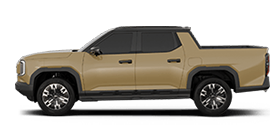
The MAXUS eTERRON9 is a dual-motor AWD battery-electric pickup with peak power of 325 kW, a 102.2 kWh battery and a combined WLTP range of 430 km. In AWD N1 3.5-tonne double-cab form, Luxury and Premium have maximum payloads of 650 and 620 kg respectively, both with a braked towing capacity of 3,500 kg.
Municipal Utilities: Route Inspections and Emergency Repairs
Municipal fleet work often centres on routes and individual sites: streetlight and signal inspections, routine checks of telecommunications or water infrastructure, roadside asset maintenance, and moving tools and parts after a breakdown. Vehicles may travel repeatedly between main roads, temporary access roads and equipment areas, without parking directly beside the work.
Typical inspection loads include toolboxes, spares, warning equipment and protective supplies. Weigh people and equipment individually, then include fitted toolboxes, lighting and other aftermarket equipment to check compliance with the eTERRON9 Luxury's 650 kg or Premium's 620 kg payload limit. Include trailer tongue weight when towing.
Routes with a fixed base can charge at shift changes or overnight. Log mileage, waiting time, climate control, equipment energy use and diversions during trials, then establish a workable departure and charging plan.
Mining and Energy Sites: Everyday Support on Challenging Roads
Support around mine perimeters, wind farms, solar arrays and substations often involves inspection personnel, supplies and light equipment. Trial everyday gravel, compacted earth and slippery slopes, checking laden clearance and turning room and confirming site access requirements.
The eTERRON9 combines dual-motor AWD with the All-Terrain System (ATS), allowing a suitable mode to be selected for the surface. Test starts on slippery slopes, low-speed turning and braking with everyday loads. Tyres, ground bearing capacity and load distribution still affect access.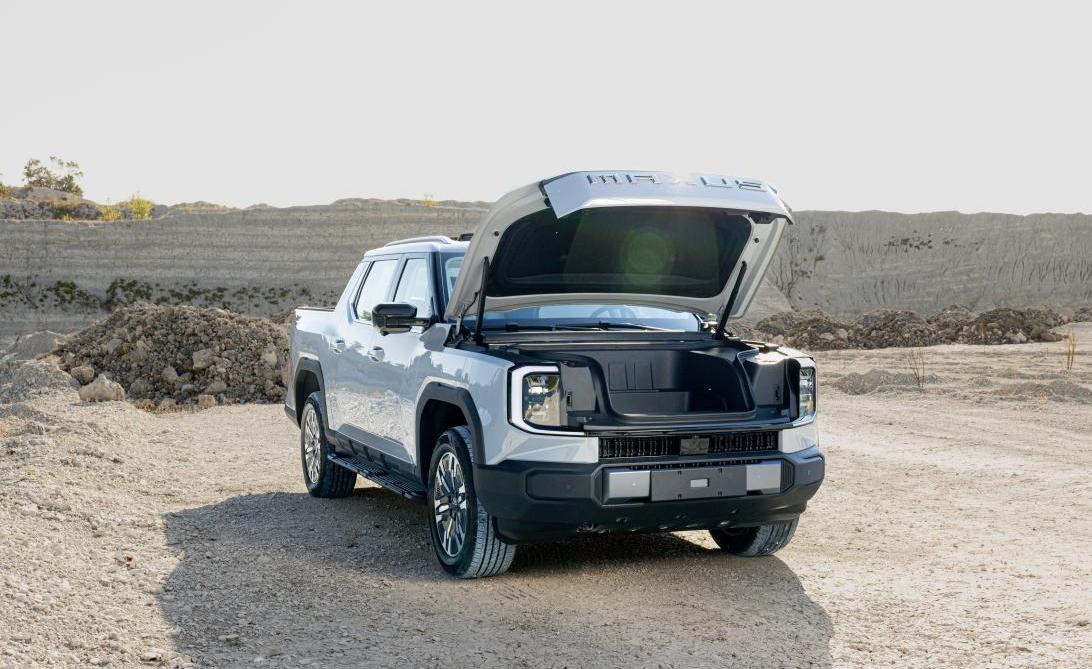
MAXUS eTERRON9 on a work-site road. Image source: MAXUS.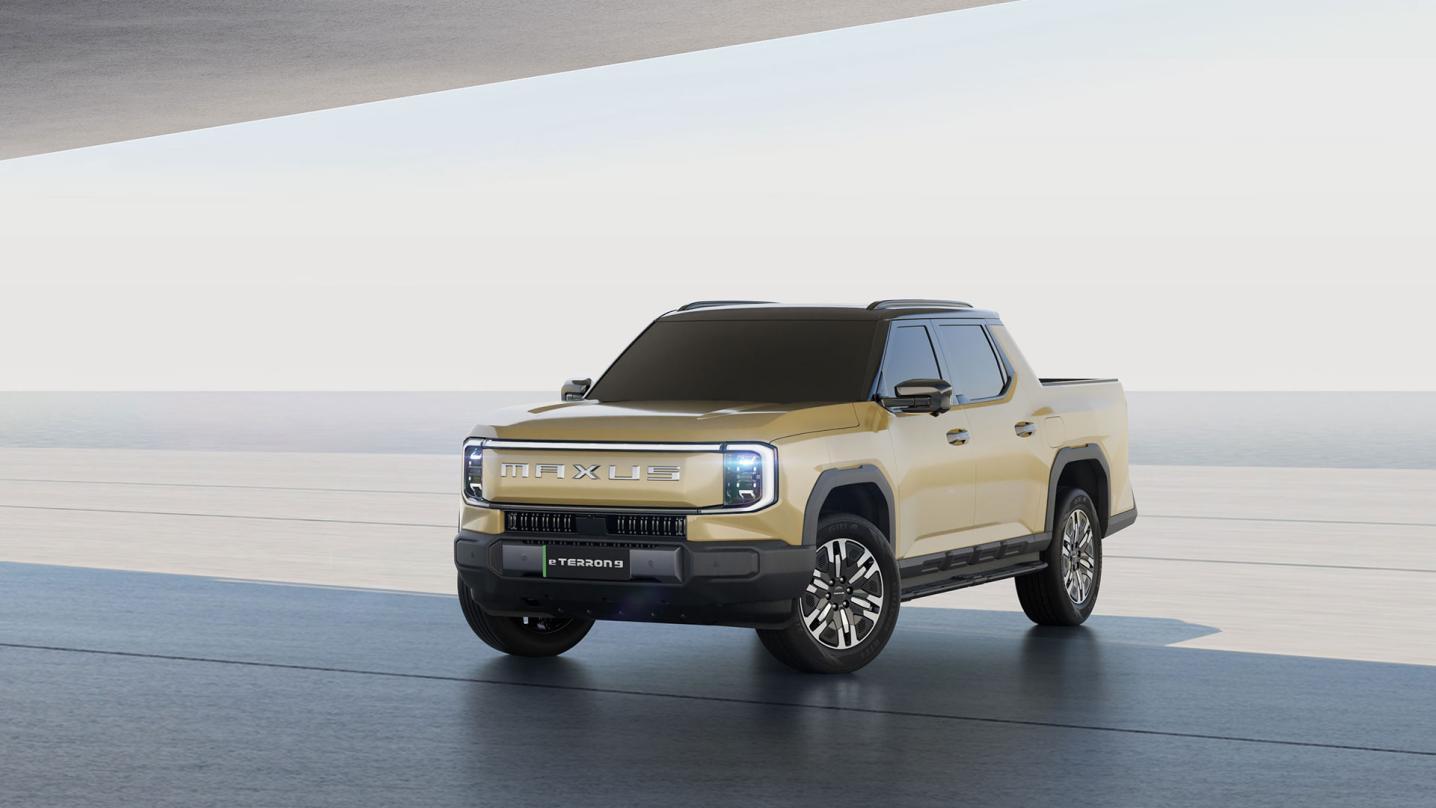
MAXUS eTERRON9 battery-electric pickup. Image source: MAXUS.
AWD, Chassis and Battery Protection: Specifications and Operating Limits
Before site entry, confirm laden ground and turning clearance, watching for raised surfaces, drains and sharp gravel. In dusty environments, inspect cooling components and the underbody as required, clearing debris that may affect braking, steering or cooling.
ATS helps adapt to different surfaces, but soft wet mud, sustained gradients and narrow roads remain demanding. Define operating areas against actual conditions and train drivers with representative loads.
For towing, check the hitch, trailer brakes, trailer tongue weight, axle limits and gross train weight. Maximum payload and maximum towing capacity cannot automatically be used together; calculate the actual departure weights.
V2L and Towing: On-Site Power and Equipment Transport
The eTERRON9 has one 2.2 kW socket in the frunk and two in the load bed, plus V2L through the charging port at up to 6.6 kW. Socket power and charging-port V2L cannot operate simultaneously. Check continuous power, starting current, operating duration, earthing and rain protection before selecting equipment.
List lighting, diagnostic and tool-charging requirements before deciding whether to use vehicle power. Recording operating hours and battery changes helps determine which tasks can use a portable generator less and how much energy needs replenishing afterwards.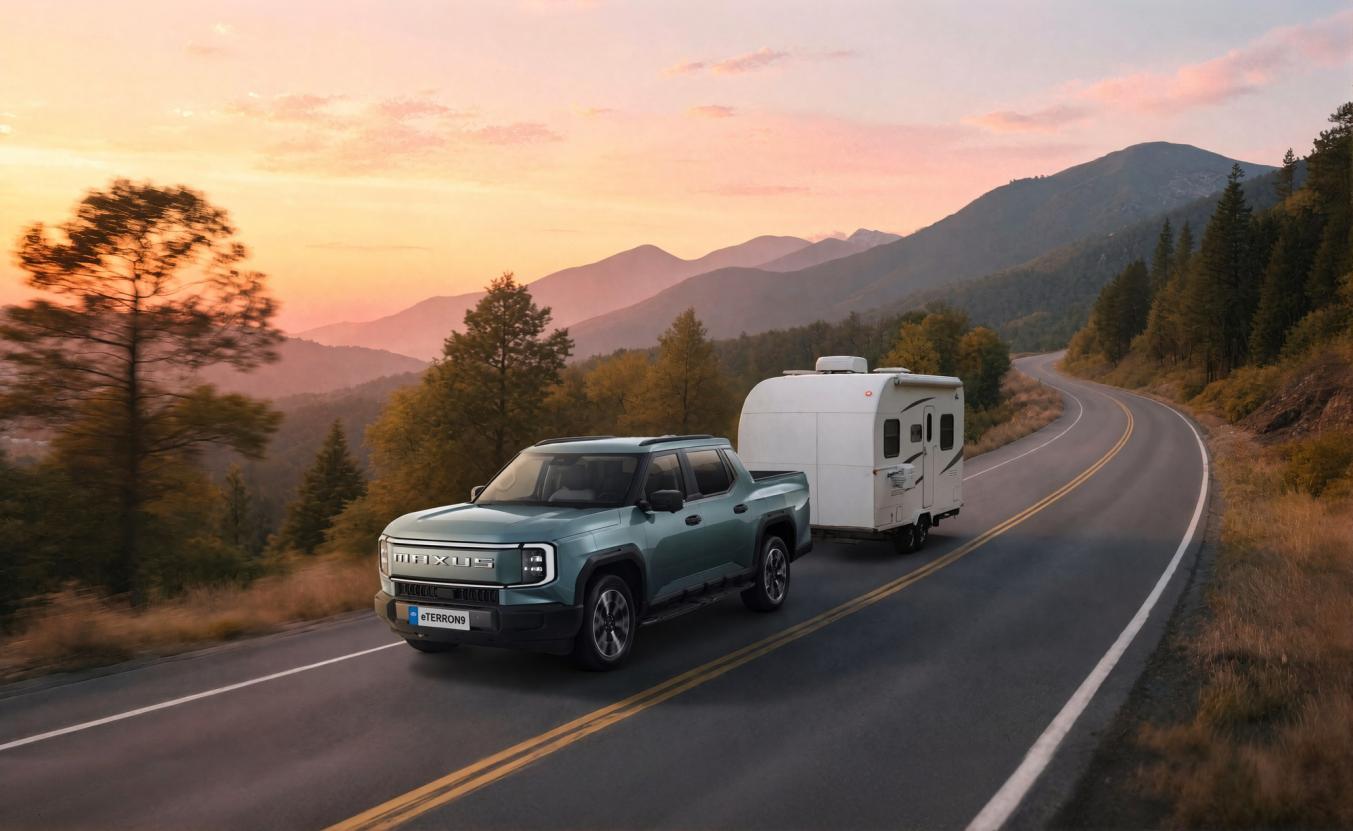
MAXUS eTERRON9 towing. Image source: MAXUS.
The eTERRON9's braked towing capacity is 3,500 kg, a reference when assessing compatible cable reels, mobile lighting towers or maintenance trailers. Trailer unladen weight counts towards total towed mass. Gradients, speed, temperature and aerodynamic drag affect consumption, so reserve energy for work and the return trip.
Fleet Procurement and TCO: Using Real Shift Data
Before bulk purchasing, trial a representative route and real shift. Record energy use at unladen, usual and peak loads, stops, charging windows, gradients, towing frequency and driver feedback. Utilities, mining and energy routes differ greatly; one generic cost-per-kilometre figure cannot accurately describe every fleet.
For defined ESG decarbonisation targets, establish existing fuel consumption and mileage, then record EV charging energy, utilisation and changes in on-site generator use. Annual reductions depend on the local electricity mix, actual operations and accounting boundaries, not vehicle type alone. Such records also support internal budgeting, tender responses and sustainability reporting.
Calculate TCO from purchase or leasing, chargers and electrical upgrades, electricity, maintenance and tyres, insurance and finance, replacement vehicles during downtime, and residual value. When assessing V2L as an alternative to generators, separately record avoided fuel, servicing and transport costs and include added electricity. Apply current procurement-market incentives, taxes and carbon benefits rather than figures from elsewhere.
Confirm local aftersales and high-voltage repair capability, parts supply, recovery coverage, high-voltage battery warranty terms and downtime support. For sites operating around the clock, service and backup arrangements affect availability as much as range and payload.
Frequently Asked Questions
Which MAXUS electric pickup can engineering fleets assess for heavy towing?
The eTERRON9 AWD N1 3.5-tonne Double Cab Luxury and Premium both have a braked towing capacity of 3,500 kg. Confirm local approval, towing equipment and task requirements before purchase.
How is the eTERRON9's available tool load calculated?
Start with the ordered version's payload allowance: 650 kg for Luxury or 620 kg for Premium. Following the vehicle documents' weight definitions, account for occupants, fitted toolboxes, carried items and trailer tongue weight, then check gross vehicle weight and axle margins.
What can the eTERRON9's 6.6 kW V2L power?
Equipment meeting connection and load requirements. Charging-port V2L supplies up to 6.6 kW, while frunk and load bed sockets are rated at 2.2 kW. The modes cannot operate simultaneously. Check starting current before connection and retain enough energy to return.
Can WLTP range be used directly as mine-site range?
No. The 430 km figure is combined WLTP test range. Gradients, gravel, load, towing and auxiliaries change actual results. Record consumption on the intended route.
How long does charging take back at base?
Reference times are approximately 12 hours from 5% to 100% at 11 kW AC, or 42 minutes from 20% to 80% at up to 115 kW DC. Actual time varies with equipment, battery temperature and starting charge.
What else should engineering fleets confirm before ordering?
Check local approval and tender requirements, equipment, aftersales and high-voltage servicing, and actual people, tool and trailer weights. Trials should cover roads and charging at base.
Related Official Links
[1] Official MAXUS eTERRON9 global model page:
https://en.saicmaxus.com/car/eterron9.shtml
[2] MAXUS eTERRON9 official specifications:
https://en.saicmaxus.com/uploads/month_202411/files/c63b9093a778f78467098ad3196898c8.pdf
[3] Official MAXUS Belgium launch information: eTERRON9, ATS and V2L output:
https://www.news.maxusmotors.be/maxus-presents-eterron-an-all-electric-pick-up-with-all-wheel-drive

Director
Automotive and motorsport author, editor, presenter, like raising cars, and outdoor sports and driving.
View anthor’s articlesTalk to a fleet advisor
Leave your contact details and a specialist will follow up within one business day
Request a consultation