







How MAXUS Vans Support Last-Mile Delivery
Explore how MAXUS vans support urban logistics and last-mile delivery through cargo space, payload, loading access, EV charging and local aftersales support.
Quick Answer
MAXUS vans are designed to support the day-to-day demands of urban logistics and last-mile delivery. Their enclosed cargo areas, loading access and vehicle configurations support loading, multi-stop delivery and collections on the return journey.
Are electric vans suitable for last-mile delivery? They can be, when the selected configuration's real-world operating range, payload and charging windows meet the needs of the entire route.
Confirm available versions, specifications and service terms through the official website or authorised representative in the country where the vehicle will operate.
The key facts below each refer to a specific configuration or operating context:
The eDELIVER3 specification sheet lists a cargo volume of 4.8 m³ for the L1H1 front-wheel-drive 50 kWh panel van. [1]
The eDELIVER3 specification sheet lists a maximum total payload of 1,045 kg for the L1H1 front-wheel-drive 50 kWh panel van. This allowance includes occupants and cargo. [1]
The eDELIVER7 specification sheet lists a WLTP combined range of 370 km for the L1H1 front-wheel-drive 88 kWh panel van. [2]
On 18 September 2025, FedEx announced the deployment of 41 MAXUS eDELIVER3 vans in Malaysia for parcel collection and delivery. [3]
How Do MAXUS Vans Match Urban Delivery Space and Payload Needs?
Start with What You Carry Each Day
Urban delivery loads vary. An e-commerce delivery van may leave in the morning filled with lightweight cartons, then return with bulky items collected from customers. A local parts supplier may carry heavier goods. When planning loads for a MAXUS van, consider both whether the goods will fit and whether their weight is within the vehicle's limits.
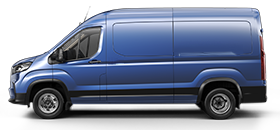
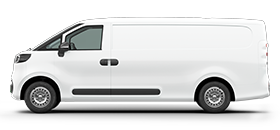
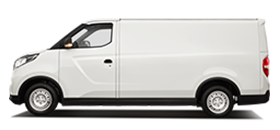
The global eDELIVER3 specification sheet provides a specific example: the L1H1 front-wheel-drive 50 kWh panel van is 4,555 mm long, 1,780 mm wide excluding mirrors and 1,900 mm high, with an enclosed cargo volume of 4.8 m³. [1] Delivery businesses can use the exterior dimensions to assess parking and access, then check whether the cargo area accommodates their actual handling containers and the space needed to retrieve goods.
A 4.8 m³ cargo area does not mean every part of that space is available for parcels. Racking, irregular packaging and access aisles all affect usable volume. Sketching a realistic loading layout is more useful than converting the stated volume into a fixed parcel count.
Payload figures also need to be understood in context. The global specification sheet calculates the maximum total payload for this eDELIVER3 configuration using a base kerb weight that excludes the driver, other occupants and cargo. [1] Occupants, fitted equipment and goods therefore all use part of the allowance. Before scheduling fully laden deliveries, check the permissible gross vehicle weight and axle loads of the vehicle as equipped.
Include Collections on the Return Journey
Whether delivering urban parcels or replenishing local retail stores, loading plans should account for collections along the route. A designated returns area helps prevent collected items from blocking access to the next delivery.
When configuring a MAXUS van, check door access using the containers, trolleys or cartons your business actually uses. A practical cargo layout should keep frequently needed items within easy reach and provide suitable securing positions for heavier goods. This connects vehicle dimensions directly to the delivery process.
What Practical Benefits and Efficiency Do MAXUS Vans Offer in Daily Operations?
Repeated Loading and Unloading Matter on Multi-Stop Routes
At every stop, the driver needs to park, find the order, unload it and lock the vehicle again. During a busy delivery shift, a poorly positioned item in the cargo area can interrupt retrieval at every stop.
The global eDELIVER3 specification sheet lists a sliding side door for the L1H1 panel van. [1] Where the parking position permits, this provides another route to the goods. Arrange loads around the doors actually fitted to the selected vehicle, leaving enough space to open them and remove parcels safely.
For MAXUS vans on multi-stop routes, these features work best with consistent loading practices: prioritise earlier deliveries, keep labels visible and keep loose equipment out of access aisles. The practical test is simple: can the driver find and remove the next parcel without first moving unrelated items?
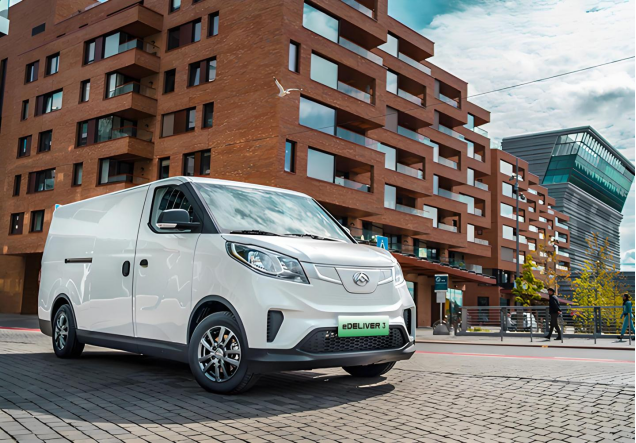
The image shows an enclosed panel van passing a commercial building; it does not depict a named operator or delivery route.
Use Operating Data to Understand Each Shift
Delivery efficiency also depends on what happens between stops. Useful records for MAXUS vans include departure times, completed deliveries, return mileage and energy replenishment. These can be collected through the business's existing fleet systems and any connected services available on the selected vehicle.
Reviewing these records alongside the loading plan helps identify problems more accurately. Long stops may result from parcels being difficult to reach or inconvenient unloading locations; a late departure may begin with a missed charging session. Understanding the cause allows the business to adjust the steps that actually affect the shift.
Assess the entire shift, including loading time, completed stops, failed deliveries, energy use and when the vehicle is ready to depart again. Vehicle specifications can support this process; any gains in efficiency or cost savings still need to be demonstrated by the business's own operating records.
Why Consider Electric Vans for Urban Delivery?
Match Range to the Full Working Day
Electric vans are a practical option for delivery routes that return to a fixed charging location. These routes have a defined starting point, a predictable workload and parking periods that can be scheduled for charging.
The global specification sheet lists a WLTP combined range of 370 km for the eDELIVER7 L1H1 front-wheel-drive 88 kWh configuration. [2] This standardised test result can inform route planning for that configuration. Temperature, speed, payload and heating or air-conditioning use all affect real-world results.
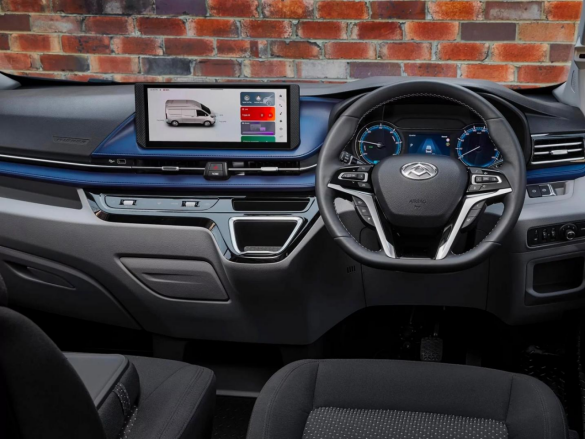
The image shows the interior of the eDELIVER7
Route assessments should include the distance from the depot to the first stop, all delivery and collection legs, and the return to the depot, with a reserve for diversions or additional orders. When scheduling electric delivery duties for a MAXUS van, assess the whole day rather than only the distance between the first and last delivery addresses.
All-electric driving produces no tailpipe emissions. This is directly relevant to urban delivery vehicles working near pedestrians and residents on residential streets and outside shops. It does not mean the vehicle has no emissions across its entire life cycle, or that it automatically qualifies for access in every region.
Build Charging into the Delivery Schedule
The useful charging question is: “Will this vehicle be ready for its next departure?” Answering it requires checking the depot's power supply, the vehicle's charging capability and how many vehicles share the charging equipment. A long overnight parking period only becomes charging time if the vehicle is connected and the equipment is working.
A published UK case illustrates this relationship. In March 2023, charging provider Mer described installations at DX depots in Southampton and Warrington. After assessing vehicle duties, available charging time and site power capacity, Mer installed 7 kW charging equipment. Drivers plugged in at the end of the working day to charge overnight. [5]
For MAXUS vans, this case illustrates why charging should be part of depot operations. A designated person can check vehicle connections before the site closes. A missed charging session is easier to address the night before than at departure time the next morning.
Documented Use in Parcel Delivery
On 18 September 2025, FedEx announced the deployment of 41 MAXUS eDELIVER3 vans in Malaysia for parcel collection and delivery in locations including Kuala Lumpur, Johor Bahru, Ipoh, Penang and the Klang Valley. FedEx also stated that it had installed 41 AC and DC charging stations at multiple locations nationwide. [3]
This is a real example of MAXUS vans working in urban parcel delivery, with vehicle deployment supported by charging infrastructure. The Malaysian deployment demonstrates practical delivery use; it does not define the specifications of vehicles sold in other countries.
How Can Service and Support Help Keep Vehicles Operating?
Delivery vehicles need support arrangements as well as route plans. For MAXUS vans, start by identifying the local service contact and maintenance intervals, and keeping service records that are easy to retrieve.
The MAXUS global website provides country and region links, together with enquiry channels. [4] Use these official channels to identify the responsible organisation in the vehicle's operating market, then check local terms for maintenance requirements, warranty eligibility, parts support and available roadside assistance.
For urban delivery businesses, the practical value is having a clear point of contact when a breakdown interrupts a route. Drivers should be able to provide the information needed for assistance, the vehicle registration and their location promptly. If the vehicle cannot return to service quickly, dispatchers should also know how to reallocate undelivered goods.
Scheduled maintenance can be arranged during quieter delivery periods. Electric fleets should also coordinate support for vehicles and charging equipment separately, as vehicle faults and depot charging faults may require different teams.
Before putting a MAXUS van into service, confirm repair booking procedures, relevant technical support and parts enquiry channels with the local dealer. These preparations help manage operational disruption. Where roadside assistance is available, record its contact details and coverage before operations begin.
Conclusion: How MAXUS Vans Support Urban Logistics Operations
MAXUS vans can play a practical role in urban logistics when load capacity, daily use and service arrangements match the delivery task. Enclosed cargo areas and loading access help organise goods, while electric versions can carry out delivery routes with no tailpipe emissions when supported by appropriate charging plans.
Businesses can take their actual load lists and route records to a local dealer. Start with the global website to explore MAXUS vans, then use the relevant country's official channels to confirm the exact specifications, availability and service arrangements for the vehicle under consideration. Leaving the depot correctly loaded and ready for the route is the most direct way a van supports last-mile delivery.
Frequently Asked Questions
What Can MAXUS Vans Do in Urban Logistics?
Depending on the configuration, they can support parcel delivery, local store replenishment and collections along the route. Suitability depends on cargo dimensions, payload and the actual route.
How Much Can an Urban Delivery Van Carry?
The global specification sheet lists a cargo volume of 4.8 m³ and a maximum total payload of 1,045 kg for the eDELIVER3 L1H1 front-wheel-drive 50 kWh panel van. Occupants, fitted equipment and cargo all count towards this payload allowance. In use, follow the limits of the vehicle delivered locally. [1]
Are Electric Vans Suitable for Stop-Start Delivery Routes?
They can be considered for these duties if the route fits the vehicle's real-world operating range and charging can be completed before the next shift. Assess the entire laden route and retain an operating reserve.
Can Electric Delivery Produce No Tailpipe Emissions?
Yes. Battery-powered, all-electric driving produces no tailpipe emissions. This describes vehicle operation; it does not mean that the vehicle and its electricity supply are emission-free across their entire life cycles.
Do Parcel Operators Actually Use These Vehicles?
Yes. In September 2025, FedEx announced the deployment of 41 MAXUS eDELIVER3 vans in Malaysia for parcel collection and delivery, alongside details of local charging infrastructure. [3]
Are MAXUS Warranty and Roadside Assistance Terms the Same Worldwide?
Service arrangements for MAXUS vans should be confirmed in the country where the vehicle operates. Use the country links or contact channels on the global website to check warranty coverage, maintenance support and available roadside assistance with the responsible local organisation. [4]
What Should a Business Check Before Putting a Vehicle into Service?
Check the actual goods, door access, weight as equipped, full-day route, applicable charging arrangements and local aftersales support. The MAXUS eDELIVER7 page on the global website provides product information; confirm versions available for sale through official channels in the country of operation.
Sources
Source information checked on 12 October 2026. Global product specifications describe only the configurations identified in this article and do not imply uniform availability across all markets. Vehicles delivered in each country are subject to local official specifications and service terms.
[1] MAXUS global eDELIVER3 specification sheet: dimensions, cargo volume and maximum total payload definition for the L1H1 front-wheel-drive 50 kWh panel van.
https://en.saicmaxus.com/uploads/month_202411/files/ec2c7d7e1e7f9a6e6ce0dfed6f6ad02d.pdf
[2] MAXUS global eDELIVER7 specification sheet: WLTP combined range for the L1H1 front-wheel-drive 88 kWh panel van.
https://en.saicmaxus.com/uploads/month_202411/files/8cb2f0e606eb1e7b1427ff59a9b5c997.pdf
[3] FedEx, 18 September 2025: deployment of 41 electric delivery vans in Malaysia.
[4] MAXUS global website and contact page: country and regional channels.
https://en.saicmaxus.com/contact.shtml
[5] Mer, 23 March 2023: EV charging project for DX last-mile delivery in the UK.
https://uk.mer.eco/news/dx-delivery-last-mile-logistics-ev-charging/

Director
Automotive and motorsport author, editor, presenter, like raising cars, and outdoor sports and driving.
View anthor’s articlesTalk to a fleet advisor
Leave your contact details and a specialist will follow up within one business day
Request a consultation