
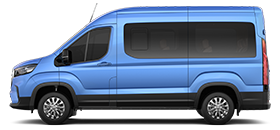

Which MAXUS Commercial Van Suits Your Needs?
Compare MAXUS electric (eDeliver 3, 5, 7, 9) and diesel (Deliver 7, 9) vans by battery, WLTP range, payload, cargo volume, towing capacity and Euro NCAP ratings.
Quick Answer: Which Commercial Vans Does MAXUS Offer?
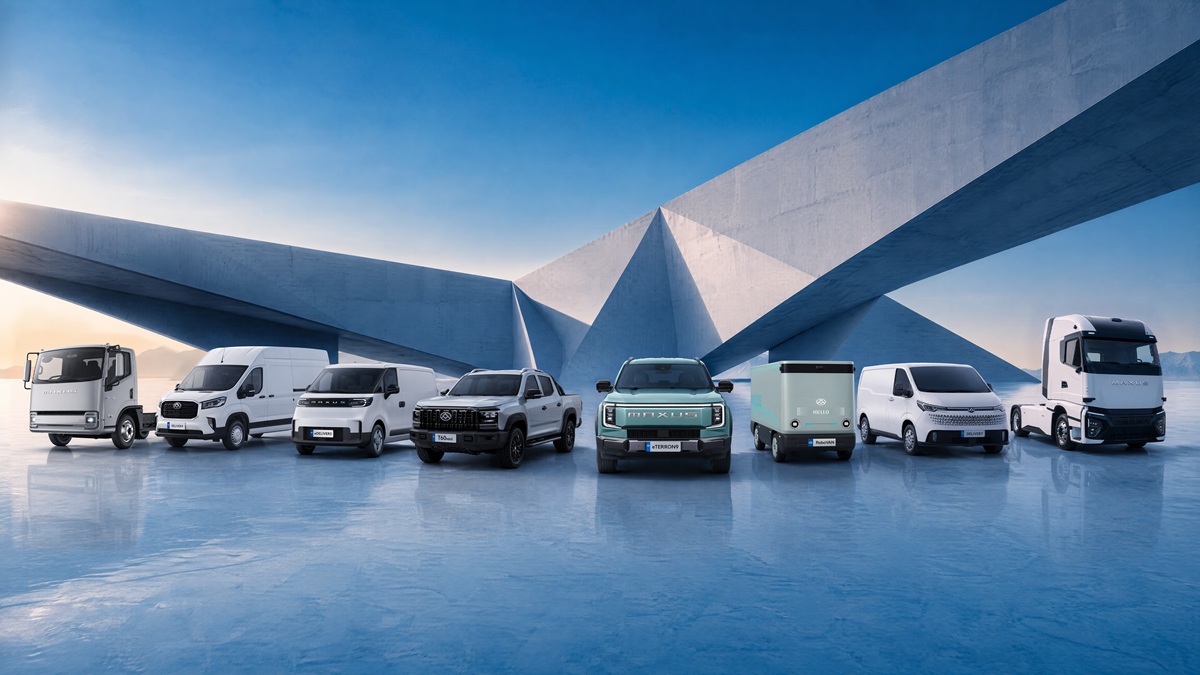
MAXUS offers four electric vans—eDeliver 3, eDeliver 5, eDeliver 7, and eDeliver 9—and two diesel vans, Deliver 7 and Deliver 9. Cargo volume ranges from 4.8 m³ in the eDeliver 3 L1 to 12.9 m³ in the Deliver 9 L3H3. The highest published all-electric range is 370 km on the WLTP combined cycle, achieved by both eDeliver 7 and eDeliver 9 in specific configurations. The three larger eDeliver models all received five-star Euro NCAP commercial van ratings in 2025.
For small to medium-urban deliveries with multiple stops, consider the eDeliver 3 or 5 first. For larger transport volumes, consider the eDeliver 7 or 9; where charging access is limited, the diesel Deliver 7 or 9 may be an option.
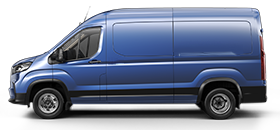
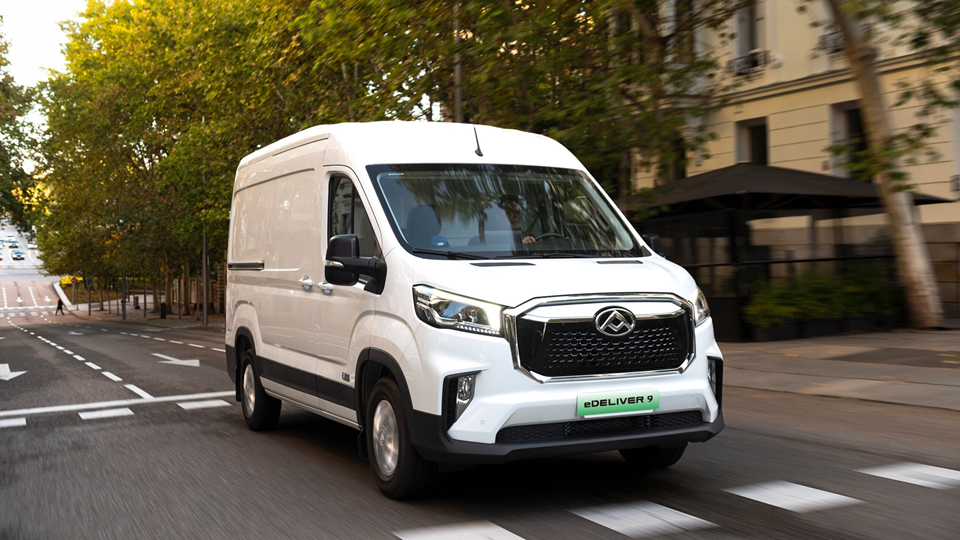 MAXUS eDeliver 9 electric van
MAXUS Commercial Van Range at a Glance
Payload, cargo volume, and range relate to specific combinations of body, battery and drivetrain. The ranges in the table below reflect the specifications of the configurations listed in the MAXUS product guides.
|
Model |
Powertrain |
Battery |
WLTP Combined Range |
Payload (Listed Versions) |
Cargo Volume |
|
eDeliver 3 |
All-electric, 118 kW / 225 N·m |
Up to 50 kWh |
— |
1,045 kg (L1 panel van); 1,405 kg (L2 chassis cab) |
4.8 m³ (L1) |
|
eDeliver 5 |
All-electric, 120 kW / 240 N·m |
50 / 64 kWh |
245–335 km (L1H1) |
1,200–1,300 kg (L1H1) |
6.6–8.7 m³ |
|
eDeliver 7 |
All-electric, front-wheel or all-wheel drive |
77 / 88 kWh |
318–370 km (L1H1) |
990–1,200 kg (L1H1) |
5.9–8.7 m³ |
|
eDeliver 9 |
All-electric, front-wheel or rear-wheel drive |
77 / 88 / 100 kWh |
287–370 km |
970–1,040 kg (L2H2, 3.5 t gross vehicle weight) |
9.7–12.3 m³ |
|
Deliver 7 |
2.0-litre turbo diesel, 123.5 kW |
— |
— |
1,300–1,330 kg (L1H1, three seats) |
6.3–9.2 m³ |
|
Deliver 9 |
2.0-litre turbo diesel, 110 kW / 375 N·m |
— |
— |
1,110–1,215 kg (L3, 3.5 t gross vehicle weight) |
11–12.9 m³ |
The table illustrates why relying on a single headline figure can be misleading. Both the eDeliver 7 and eDeliver 9 can achieve a range of 370 km, but this relates to the compact L1H1 front-wheel-drive van with an 88 kWh battery in the former, and the longer L3H2 rear-wheel-drive van with a 100 kWh battery in the latter.
Which Electric Vans Does MAXUS Offer?
MAXUS eDeliver 3
The eDeliver 3 is a compact electric van designed for urban deliveries.
• Battery capacity up to 50 kWh; motor power/torque: 118 kW / 225 N·m
• L1 short-wheelbase panel van: 4,555 × 1,780 × 1,900 mm, 4.8 m³ cargo volume, 1,045 kg payload, and 2,660 kg gross vehicle weight
• L2 chassis-cab version: 1,405 kg payload, suitable for operators who need to fit their own bodywork
Its compact body and 4.8 m³ cargo space suit urban deliveries with multiple stops. In September 2025, FedEx deployed 41 eDeliver 3 vehicles in Malaysia for local deliveries.
MAXUS eDeliver 5
The 2026 eDeliver 5 is built on MAXUS’s MILA (Modular Intelligent Light Architecture) platform. It offers 50 kWh and 64 kWh batteries, with motor power/torque of 120 kW / 240 N·m.
|
eDeliver 5 Body Version |
Cargo Volume |
|
L1H1 |
6.6 m³ |
|
L1H2 |
7.6 m³ |
|
L2H1 |
7.5 m³ |
|
L2H2 |
8.7 m³ |
The L1H1 panel van specifications are as follows:
• 50 kWh: 245 km WLTP combined range / 350 km urban range. Payload is 1,260 kg with two seats or 1,300 kg with three seats. Charging from 20% to 80% takes approximately 25 minutes using 77 kW DC charging.
• 64 kWh: 335 km WLTP combined range / 489 km urban range, with a payload of 1,200 kg. Charging from 20% to 80% takes approximately 36 minutes using 70 kW DC charging.
The eDeliver 5 received five stars in Euro NCAP’s commercial van safety assessment in May 2025.
MAXUS eDeliver 7
The eDeliver 7 offers 77 kWh or 88 kWh batteries and front-wheel-drive or all-wheel-drive versions.
• Front-wheel drive: 150 kW / 330 N·m
• All-wheel drive: combined power/torque of 260 kW / 520 N·m
• Cargo volume: 5.9 m³ (L1H1), 6.7 m³ (L2H1), 8.7 m³ (L2H2)
• L1H1 dimensions: 5,079 × 2,030 × 1,990 mm
|
eDeliver 7 L1H1 Version |
WLTP Combined / Urban Range |
Maximum Payload |
|
FWD, 77 kWh |
318 / 485 km |
1,200 kg |
|
FWD, 88 kWh |
370 / 542 km |
1,125 kg |
|
AWD, 88 kWh |
335 / 443 km |
990 kg |
MAXUS eDeliver 9
The eDeliver 9 is MAXUS’s largest electric van, offering 77, 88 or 100 kWh batteries and front-wheel-drive or rear-wheel-drive versions.
|
eDeliver 9 Panel Van Body Version |
Cargo Volume |
|
L2H2 |
9.7 m³ |
|
L3H2 |
11.0 m³ |
|
L3H3 |
12.3 m³ |
• WLTP combined range: 287 km (L2H2 FWD, 77 kWh), 328 km (L2H2 FWD, 88 kWh), 370 km (L3H2 RWD, 100 kWh)
• At a gross vehicle weight of 3,500 kg, the 77 kWh L2H2 version has a payload of 1,040 kg, while the 88 kWh L2H2 version has a payload of 970 kg. Check the gross vehicle weight rating of the selected version when ordering.
• Charging: approximately 51 minutes from 10% to 80% using DC charging; approximately 8–10 hours from 5% to 100% using AC charging.
In November 2025, MAXUS UK announced a new order for 750 eDeliver 9 vehicles, with deliveries scheduled to begin in February 2026.
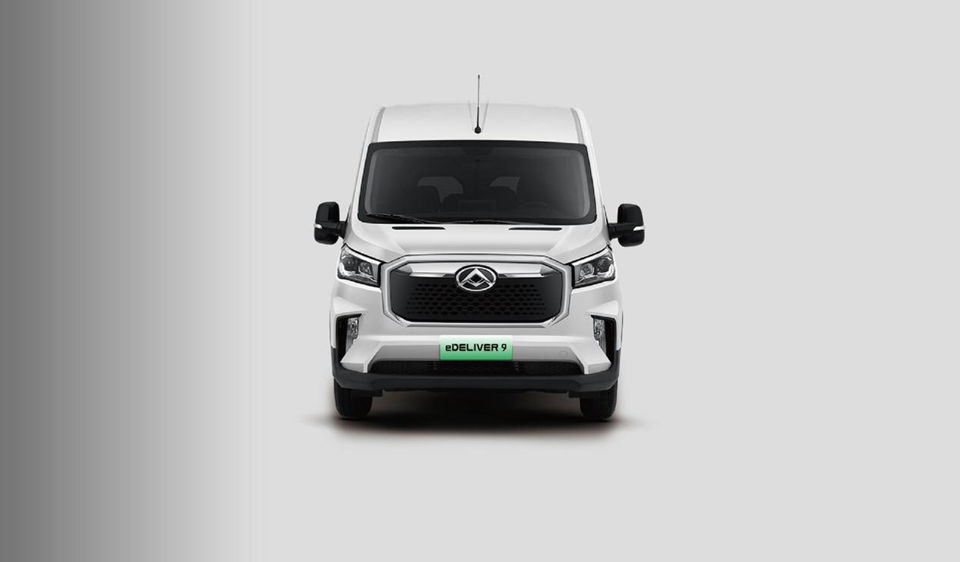 Front view of the MAXUS eDeliver 9
Which Diesel Deliver Vans Does MAXUS Offer?
MAXUS Deliver 7
The Deliver 7 is a van powered by a 2.0-litre turbocharged diesel engine, producing a maximum of 123.5 kW and torque of 390 N·m with the six-speed manual transmission or 385 N·m with the automatic transmission.
• Cargo volume: 6.3 m³ (L1H1), 7.2 m³ (L2H1), 9.2 m³ (L2H2)
• Payload (L1H1, single sliding door, three seats): 1,300 kg manual / 1,330 kg automatic
• Braked towing capacity: 2,500 kg (L1H1 / L2H1), 2,370 kg (L2H2); unbraked towing capacity: 750 kg
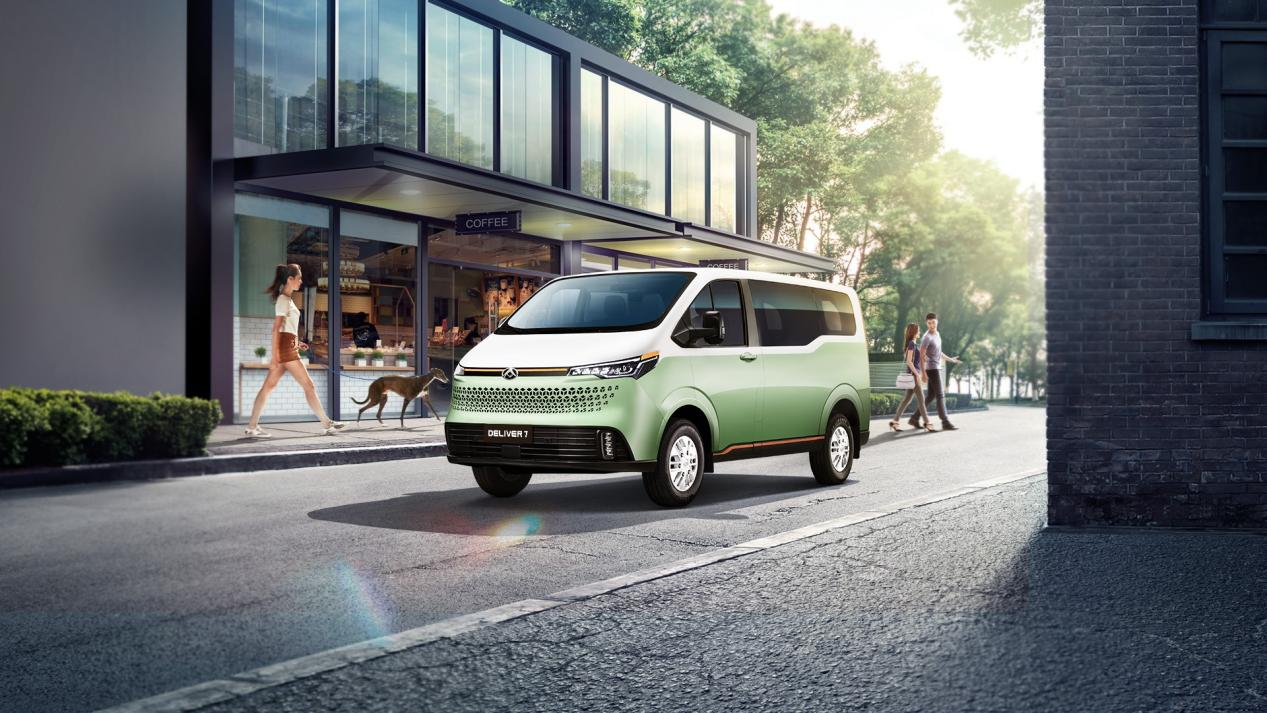 MAXUS Deliver 7
MAXUS Deliver 9
The Deliver 9 panel van uses a 2.0-litre turbocharged diesel engine, producing a maximum of 110 kW at 3,500 rpm and peak torque of 375 N·m at 1,500–2,400 rpm. It is available with front-wheel or rear-wheel drive.
|
Deliver 9 Panel Van |
Cargo Volume |
Maximum Payload (3,500 kg Gross Vehicle Weight) |
|
L3H2 FWD |
11.5 m³ |
1,215 kg |
|
L3H2 RWD |
11.0 m³ |
1,140 kg |
|
L3H3 FWD |
12.9 m³ |
1,200 kg |
|
L3H3 RWD |
12.3 m³ |
1,110 kg |
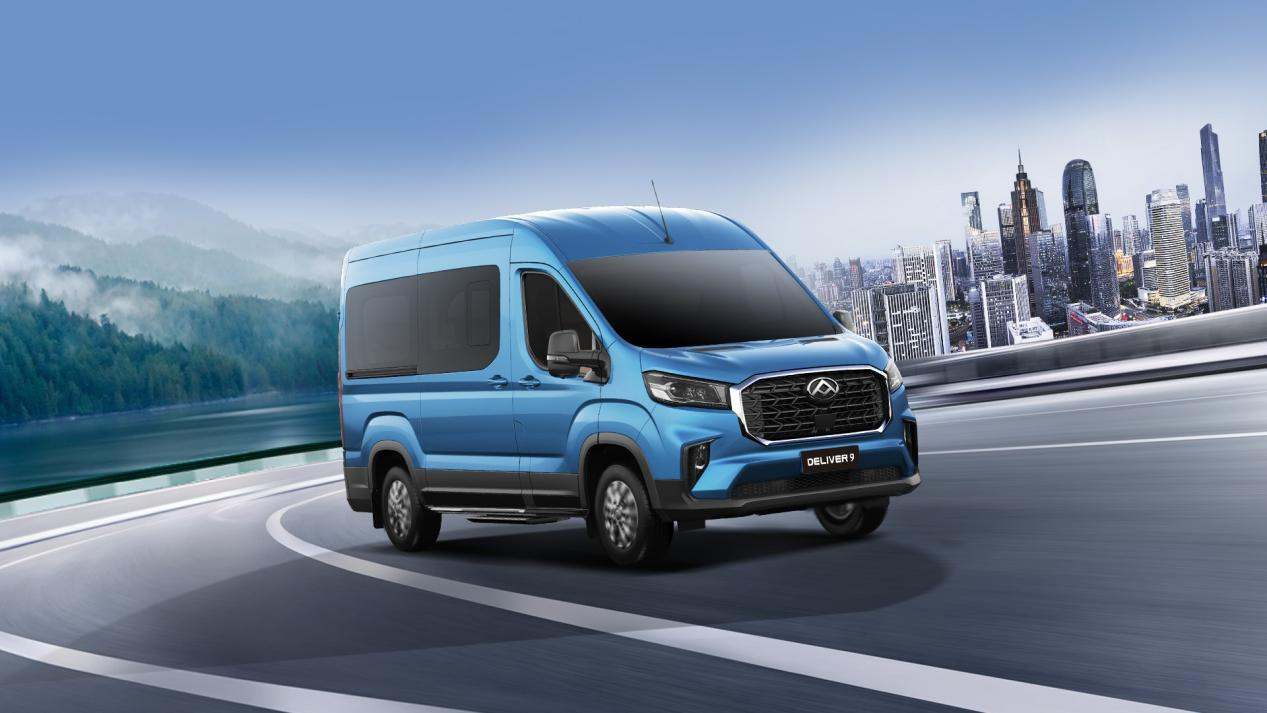 MAXUS Deliver 9
Which MAXUS Electric Van Has the Longest Range?
Two models share the longest WLTP combined range of 370 km:
• eDeliver 7 L1H1 FWD, 88 kWh: 370 km combined range and 542 km WLTP urban range
• eDeliver 9 L3H2 RWD, 100 kWh: 370 km combined range
Compare WLTP combined range with combined range, and urban range with urban range, as the two cycles reflect different driving conditions. Actual range also depends on speed, temperature, load, road conditions, and air conditioning use.
How Should You Compare MAXUS Commercial Vans?
1. Check Payload for Each Version First
Payload varies with battery capacity, drivetrain, body length, roof height and seating capacity. A larger battery adds weight, so the 88 kWh eDeliver 7 carries 75 kg less than the 77 kWh version. To determine the actual cargo weight available, deduct the weight of the driver, passengers, racking and conversion equipment from the payload of the version you intend to purchase.
2. Check Cargo Volume Separately
For bulky but lightweight goods, cubic metres matter more than kilograms. Cargo volume in the eDeliver range increases from 4.8 m³ in the eDeliver 3 L1 to 6.6–8.7 m³ in the eDeliver 5, and up to 9.7–12.3 m³ in the eDeliver 9.
3. Assess Range Alongside Battery Capacity
A larger battery does not necessarily deliver a longer range; body size and drivetrain also matter. The eDeliver 7 can achieve 370 km with an 88 kWh battery, while the significantly larger eDeliver 9 requires a 100 kWh battery to achieve the same range.
4. Check Charging Capabilities Against Shift Patterns
DC charging time depends on the battery, starting and target charge levels, and charger power:
• eDeliver 5, 50 kWh: approximately 25 minutes from 20% to 80% (77 kW)
• eDeliver 5, 64 kWh: approximately 36 minutes from 20% to 80% (70 kW)
• eDeliver 9: approximately 51 minutes from 10% to 80%
For fleets charging at a depot overnight, AC charging capability may be more important. Charging the eDeliver 9 from 5% to full using AC takes approximately 8–10 hours.
Electric or Diesel: What Should Businesses Compare?
A single specification cannot determine the choice. Start by recording each vehicle’s daily route and how long it stays parked at locations where charging is available.
An electric eDeliver suits the following conditions:
• Daily mileage falls within the selected version’s WLTP range, with a sufficient margin;
• Charging is available at the depot or along the route;
• The payload and cargo volume of the specific version meet the requirements of the goods carried.
A diesel Deliver suits the following conditions:
• Charging access is limited or unreliable;
• Heavy trailers are frequently towed (the Deliver 7 offers up to 2,500 kg braked towing capacity);
• Routes are longer and vary from day to day.
Compare total cost of ownership within the same market and over the same ownership period, including purchase costs, energy, maintenance, insurance, taxes, downtime and residual value.
MAXUS Vans in Real Fleet Operations
• UK: In November 2025, MAXUS UK announced an order for 750 eDeliver 9 vehicles, with deliveries scheduled to begin in February 2026.
• Malaysia: In September 2025, FedEx announced the deployment of 41 eDeliver 3 vehicles for local deliveries.
• Industry recognition: The GREENFLEET Awards named MAXUS LCV Manufacturer of the Year in 2024 and Electric Vehicle Manufacturer of the Year in 2021.
Frequently Asked Questions
1. Which commercial vans does MAXUS offer?
Four electric vans (eDeliver 3, 5, 7 and 9) and two diesel vans (Deliver 7 and 9).
2. Which MAXUS electric van has the longest range?
The eDeliver 7 (L1H1 FWD, 88 kWh) and eDeliver 9 (L3H2 RWD, 100 kWh) both offer a WLTP combined range of 370 km. The eDeliver 7 also has a published WLTP urban range of 542 km.
3. Which MAXUS van has the most cargo space?
Among electric models, the eDeliver 9 L3H3 offers 12.3 m³. The largest across all models is the diesel Deliver 9 L3H3 FWD, at 12.9 m³.
4. What is the difference between eDeliver 3 and eDeliver 5?
The eDeliver 5 is larger, offering 6.6–8.7 m³ of cargo volume compared with 4.8 m³, and offers a 64 kWh battery with up to 335 km WLTP combined range. It is built on the MILA architecture and has a five-star Euro NCAP commercial van rating.
5. Is the MAXUS Deliver 7 electric?
No. The Deliver 7 and Deliver 9 are diesel models; electric models belong to the eDeliver range.
6. Have MAXUS electric vans received five-star Euro NCAP ratings?
Yes. The eDeliver 5 received five stars in May 2025. The eDeliver 7 and 9 received four stars in May 2025 and five stars following reassessment in December of the same year. These are commercial van ratings, which use a different assessment protocol from passenger car ratings.
7. What if reliable charging is unavailable?
Consider the diesel Deliver 7 or Deliver 9, choosing a body version that matches your cargo requirements.
8. Are specifications the same in every country?
No. Batteries, body versions, equipment and warranty terms vary by market. Confirm these on the local MAXUS website before ordering.
Sources
• MAXUS eDeliver 3 product information (provided by the client)
• MAXUS eDeliver 5 Product Guide (10 September 2026)
• MAXUS eDeliver 7 Product Guide (20 May 2026)
• MAXUS eDeliver 9 Model Product Guide (15 January 2026)
• MAXUS Deliver 7 Product Guide (Euro 26MY V4)
• MAXUS Deliver 9 Product Guide (5 June 2026)
• Euro NCAP commercial van assessments for eDeliver 5, 7 and 9 (2025)
• MAXUS UK fleet order announcement (November 2025); FedEx Malaysia announcement (September 2025)

Director
Automotive and motorsport author, editor, presenter, like raising cars, and outdoor sports and driving.
View anthor’s articlesTalk to a fleet advisor
Leave your contact details and a specialist will follow up within one business day
Request a consultation